BHP Gains as China Lifts Six-Month Iron Ore Ban
BHP (ASX:BHP) climbed roughly 3% on Tuesday, 14 April, one of the stronger performers on the ASX 200, after China’s state-backed iron ore buyer CMRG told domestic steel mills they were free to purchase BHP cargoes again. The news ends a six-month standoff that had progressively locked several of BHP’s key Pilbara iron ore grades out of the world’s largest steel market. For investors, the question is simple: is this a genuine reset or a temporary ceasefire that could break down again?

What Actually Happened and Why It Took Six Months
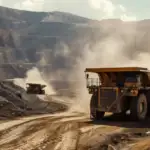
CMRG, set up in 2022 to centralise China’s iron ore procurement and push major miners for better pricing terms, began tightening restrictions on BHP in September 2025. It started with a ban on Jimblebar fines, then extended to Jinbao fines in November and Newman fines in March 2026. The curbs reduced spot market availability and pushed up prices for Chinese steelmakers, even as portside stockpiles hit record highs.
An early concession came in late 2025 when BHP agreed to settle 30% of its spot iron ore trade with China in yuan, a meaningful departure from its preferred US dollar terms. Despite that, restrictions kept tightening until last week, when outgoing CEO Mike Henry and incoming CEO Brandon Craig travelled to China together. Craig met with China Baowu Steel Group’s chairman in Shanghai and held separate talks with Chinalco in Beijing. Shortly after, CMRG notified steel mills that they could resume buying BHP cargoes from the following week. We believe Craig’s early visit sent a clear signal that the new BHP leadership, which he officially takes the helm of on 1 July 2026, is prioritising the China relationship from day one. That is a meaningful shift in tone, and it matters for sentiment around BHP’s iron ore division.
That said, RBC analyst Kaan Peker cautioned against reading too much into the outcome, noting that a lasting strategic shift would only be confirmed over time. No formal long-term supply contract has been signed yet, which means the underlying tension has not fully disappeared. Iron ore seaborne prices, which have mostly held above US$100 per tonne since August 2025, dipped slightly on the news as traders anticipated more BHP supply returning to the market.
The Ripple Effect on FMG, Rio Tinto, and South32
The resolution lifts a cloud across the broader ASX iron ore sector. Fortescue (ASX:FMG) is the most exposed given its pure-play dependence on iron ore and China as its dominant customer, making it the clearest beneficiary of improved trade conditions. Rio Tinto (ASX:RIO) gains similarly but with more cushion from its aluminium and copper divisions. South32 (ASX:S32) has less direct iron ore exposure and has been the standout performer among the major miners over the past year, driven by copper, manganese, and aluminium earnings. For investors comparing the three, RIO’s diversification offers the most balanced risk profile right now.
Buy the Rally or Wait for a Better Entry?
At around A$56, BHP is trading close to its 52-week high of A$59.39. The stock has already priced in much of the good news, which is exactly why the absence of a formally signed contract matters more than it might seem. With underlying EBITDA up 25% to US$15.5 billion in the first half of FY26, a 58% EBITDA margin, and record iron ore production from its Western Australia operations, the fundamentals are solid. The ban resolution removes a specific overhang that had been weighing on the stock.
We believe BHP looks reasonably attractive at current levels for long-term investors comfortable with commodity cycle exposure. The combination of strong copper growth, where copper now contributes 51% of group EBITDA, and a new CEO actively rebuilding the China relationship supports the bull case. However, conservative investors may prefer to wait until a formal long-term supply contract is signed before adding to positions. Until CMRG commits in writing, the risk of the dispute reigniting remains real and should not be dismissed.