First-time bond issuance retires revolving credit draw and repositions the balance sheet for P2000 and Colina decisions
The way a company structures its debt tells investors a lot about where management thinks the business sits in its maturity curve. PLS Group Limited (ASX:PLS) has just closed its debut offering of US$600M in 6.875% Senior Notes due 2031, using the proceeds primarily to retire the A$375M drawn balance on its revolving credit facility. The company simultaneously reduced the size of that revolving credit facility from A$1B to A$500M.
That is not a contraction of liquidity. It is a deliberate reconfiguration of the capital structure, replacing short-duration bank revolving debt with longer-dated fixed-rate institutional bond financing. The revolving credit facility is now entirely undrawn.
Accessing the US high-yield bond market as a debut issuer at 6.875% is itself a meaningful signal. The US institutional debt market is one of the deepest in the world, and completing a US$600M offering at that coupon reflects a credit profile that sophisticated fixed-income investors were comfortable underwriting. That external validation of the balance sheet is worth noting alongside the mechanics of the transaction itself.
What Replacing Revolving Credit with Fixed-Rate Bonds Actually Changes for PLS
Before this transaction, PLS had A$375M drawn against its revolving credit facility, which is a floating-rate obligation that requires periodic bank syndicate renewal. The Senior Notes mature in 2031, extending the effective maturity on that portion of the debt stack by several years relative to a typical revolving facility renewal cycle.
Revolving credit facilities carry refinancing risk because the bank syndicate providing the facility can choose not to renew at the same terms. Fixed-rate bond financing removes that refinancing risk for the full term of the notes. For a company approaching major capital allocation decisions on two growth projects, having certainty around debt maturity profiles reduces one variable from what is already a complex decision-making environment.
Why the Undrawn RCF Now Functions as a Strategic Optionality Tool for P2000 and Colina
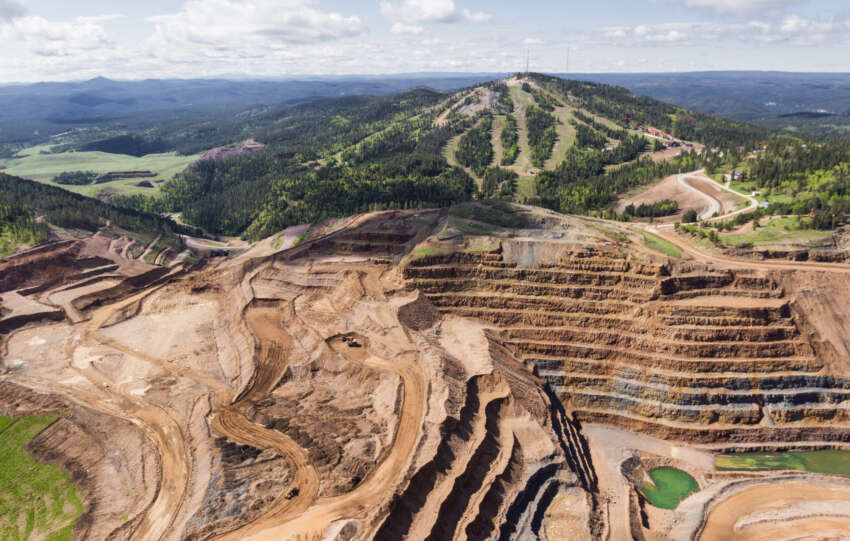
With the revolving credit facility reduced to A$500M and fully undrawn, PLS has A$500M of flexible standby liquidity available without the carrying cost of a drawn balance. That is meaningful heading into Final Investment Decision reviews for the P2000 Project at Pilgangoora and the Colina Project in Brazil, both of which are progressing through feasibility studies and optimisation work.
An undrawn revolving facility provides the kind of capital flexibility that avoids forcing equity issuance at unfavourable moments. If either FID requires near-term project expenditure, the RCF provides a bridge to longer-term project financing without diluting existing shareholders.
The Investors’ Takeaway for PLS Group
PLS has used a favourable credit market window to improve its capital structure in a way that benefits the longer-term investment case. The immediate effect is a cleaner balance sheet with lower near-term refinancing risk. The more strategically significant effect is that the undrawn A$500M revolving facility now provides optionality that management can deploy against P2000 and Colina without being forced into the equity market.
The catalysts to monitor are the feasibility study outcomes and timing of Final Investment Decisions on both projects. If PLS can secure Board approval on either within the next 12 months, the debt structure now in place gives it a credible path to execution. More coverage of ASX lithium and resources names is available at stocksdownunder.