Eleven of thirteen packer tests have hit, with flow rates touching 857 litres per hour.
Lithium brine projects live and die on two numbers. How concentrated the brine is, and how easily it flows out of the ground. Patagonia Lithium (ASX:PL3) just delivered strong readings on both for Well 7 at its Formentera project in Argentina’s Jujuy province.
The headline result from the 11th packer test at 332m depth showed specific gravity of 1.11 g/cm³, electrical conductivity of 173.6 mS/cm and total dissolved solids of 86.6 ppt. In plain English, that means the brine is dense, salty and electrically rich, all proxies for high dissolved lithium content. Anything above 1.10 g/cm³ on specific gravity is considered excellent in the industry.
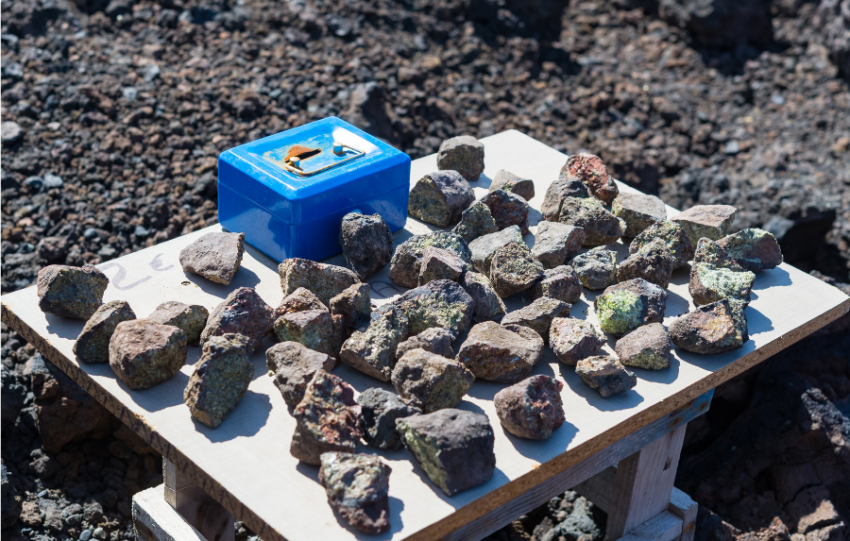
Eleven of thirteen packer tests on this well have now been successful, with flow rates ranging from 200 to 857 litres per hour. That flow band matters because it tells investors the host rock will actually give up its brine during commercial pumping, not just sit there looking good on a lab sheet.
Executive Chairman Phillip Thomas flagged that the company now expects to expand the Mineral Resource Estimate domain on the back of the porosity results. The current MRE sits at 551,400 tonnes of lithium carbonate equivalent at 294 mg/L, upgraded in July 2025.
Why the sandstone-and-clay structure changes the resource math
The technical detail worth understanding is what sits above and below the brine zone. Well 7 has intersected a thick sandstone unit with high porosity, capped by a clay aquitard. Think of it as a sponge under a lid.
The sponge holds and conducts the lithium-rich brine. The lid stops lower-grade waters from above mixing in and diluting it. That combination is exactly the kind of geological setup that makes brine extraction economic at scale.
Each corner of the concession has now been drilled, and the porosity readings have been consistent across the project area. That geological continuity is what gives consultants confidence to expand the MRE domain rather than just upgrade a single hole.
Pump tests on Wells 1 to 4 are the next real read
While Well 7 has been pulling packer samples, Wells 1, 2, 3 and 4 are now under a 72-hour pump test with monitoring on neighbouring wells for brine level changes. This is a more meaningful commercial test than packer sampling.
Packer tests confirm the brine is there and flowable in short bursts. A sustained 72-hour pump test tells you whether the aquifer recharges fast enough to support continuous production without drawing the water table down. It is the difference between a chemistry result and an engineering one.
The next packer test on Well 7 will sit at 375m depth, with the well projected to reach 600m. That gives investors at least another six to eight test intervals to track before total depth.
Where this sits against the broader lithium tape
Lithium prices have spent most of the past 18 months in a difficult place, with spodumene producers cutting and brine developers slowing capital programs. Patagonia is moving in the opposite direction, which is either contrarian conviction or expensive timing depending on your view.
Our take is that the cycle position actually favours brine projects with genuinely strong geology. Hard rock supply is being curtailed, capex on new brine builds is being deferred industry-wide, and any project that can demonstrate a credible path to a pilot plant will look very different in a recovered price environment.
The risk is the gap between resource and revenue. Patagonia still has to complete a Definitive Feasibility Study, secure funding for a pilot plant, and ultimately a commercial facility. That is a multi-year, multi-raise journey at a market cap that leaves little margin for error.
The Investors Takeaway for Patagonia Lithium
The packer results are encouraging, but the investment case now hinges on three things. The 72-hour pump test data from Wells 1 to 4, the completion of Well 7 to 600m, and the next MRE update incorporating the expanded domain. Each of those is a discrete catalyst inside the next six to nine months.
We would want to see the pump test results land in the same quality band as the packer assays before getting more constructive. Strong packer numbers that fail to translate into sustained pumping flows is the classic disappointment trajectory for brine plays, and it is the single biggest risk we would flag for new investors. Readers can find more in-depth coverage of ASX-listed lithium names at stocksdownunder.
If Patagonia delivers on the pump tests and the MRE expansion, it positions itself as a credible mid-stage brine developer right as the lithium cycle starts looking interesting again. Timing the bottom is hard. Owning the right geology when it turns is the only thing that matters.