Great Western rehab starts on rock chips of 32.2g/t gold and the Orleans playbook now scales
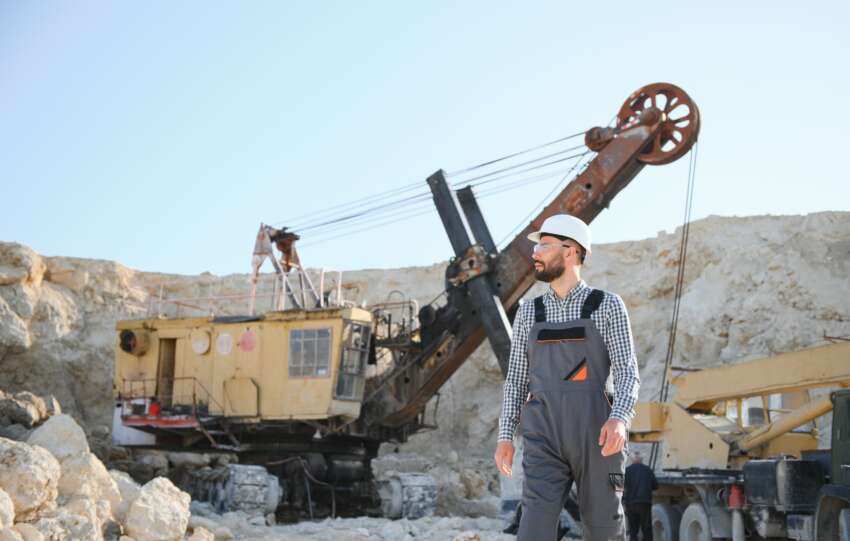
Nelson Resources (ASX:NES) has commenced underground rehabilitation at the historic Great Western Mine, the second of five historic mines it is working through at the Gold Point Gold-Silver Project in Nevada. This is the moment the company stops being a one-mine story and starts looking like a genuine camp-scale exploration play.
The first mine, Orleans, was rehabilitated in May and is already drilling. Great Western now repeats that playbook on a target area where recent surface rock chips returned 32.2g/t gold and 28.4g/t silver, alongside other samples grading 31.7g/t Au and 100g/t Ag. The geology is doing its job. The question is whether the workflow Nelson built at Orleans actually scales.
The key idea behind Gold Point is that the entire district has been consolidated under one owner for the first time in over 140 years. More than 5km of historic underground workings sit across five mines, with at least 75,000oz of gold reportedly produced historically at grades of 20 to 30g/t.
That is the kind of grade that justifies underground access from day one rather than years of surface drilling. Today’s announcement is Nelson signalling it intends to compound that advantage.
Why repeating the Orleans model matters more than the rock chips
The surface assays at Great Western are eye-catching, but the more important signal is that Nelson is now running a repeatable process. Rehabilitate, map, sample, survey, model, define drill targets, drill. That is the same sequence completed at Orleans inside roughly a month.
If Nelson can hold to that cadence, the company has a credible path to multiple drill-ready underground targets across five historic mines within twelve to eighteen months. That is a very different rate of newsflow than a typical surface-only Nevada explorer.
The key point for investors is that underground access changes the unit economics of exploration. Shorter holes, better angles and historic stope information mean each metre drilled carries more information per dollar than a surface campaign would deliver.
The skeptical read on a two-mine rehab program
Our concern is that running rehabilitation at Orleans and Great Western in parallel, while pushing surface mapping at Lime Point, Grand Central and Cook, stretches a small company across a lot of workstreams. Execution risk for camp-scale juniors usually shows up as either cost overruns or slipping timelines.
Nelson has not yet disclosed the rehabilitation budget for Great Western or a target date for first underground drill platform. Both are details the market should be looking for in the next quarterly.
The other risk is geological. Surface rock chips of 32g/t are exciting but selective. Until underground sampling at Great Western confirms the vein continues at depth and width, the bull case rests on analogy to Orleans rather than its own dataset.
What 75,000oz of historic production at 20 to 30g/t actually implies
Historic production figures need to be read carefully because pre-WWII miners only chased what they could see and process at the time. The 75,000oz figure came from only four of fifteen mapped high-grade veins, meaning the bulk of the system has never been systematically tested.
At today’s gold price, even modest resource definition across multiple veins changes the conversation about Gold Point materially. The district sits within a broader Walker Lane endowment of more than 40Moz of gold within a 90km radius.
Worth noting that resource definition is still some way away. Nelson has not yet declared a JORC resource at Gold Point and the company itself flags that further exploration may or may not result in one.
The Investors Takeaway for Nelson Resources
The investment story at Gold Point only works if the rehabilitation cadence continues. Two mines open is a meaningful start. Four would signal a genuinely industrialised exploration model and force the market to re-rate Nelson against single-asset Nevada peers.
Investors should be watching for three things over the next two quarters. First drill results from the Orleans maiden underground program. Underground assay confirmation that the Great Western veins extend beyond surface exposures. And a clear indication of when Lime Point or Grand Central rehabilitation begins.
For broader context on small-cap gold developers and our previous coverage of names with a similar high-grade thesis, see our recent work at stocksdownunder.