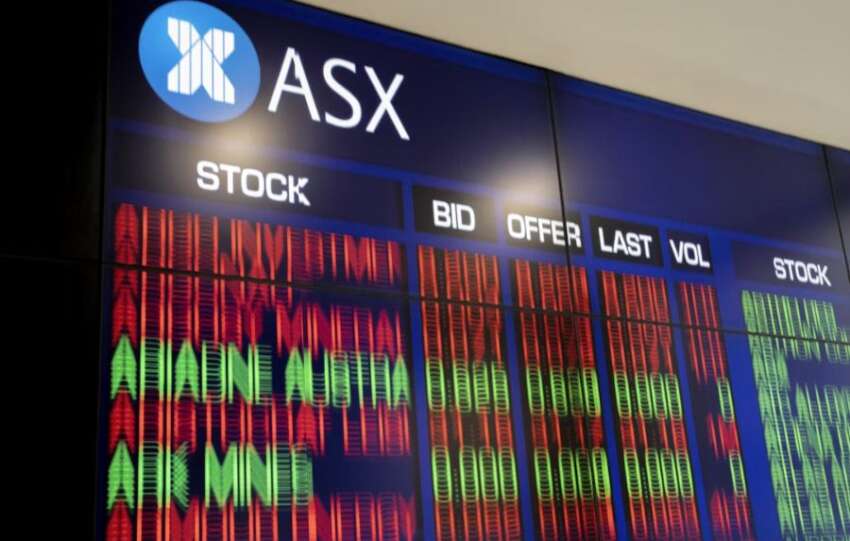
Something changed how the regulators were looking at the CFD markets, and it didn’t happen overnight. The post-pandemic period has seen a segment of new retail traders enter the market through mobile apps, many of them inexperienced. Brokers multiplied. Marketing got louder. And then some of those brokers would fall down and take client money with them. And that sequence of events did not go unstudied in financial oversight offices from London to Singapore.
Fast forward to 2026, and the mood across the major regulatory bodies had clearly changed. The question was no longer whether or not CFDs should and must be more closely supervised, but how to organise that supervision so that it did not necessarily lead to retail traders running to unregulated trading platforms in less scrupulous jurisdictions. That tension between protection and access is at the heart of most of the policy debates that are currently taking place.
This piece follows how the industry has responded: what’s really changed in leverage and margin rules, how compliance technology has evolved to meet new disclosure requirements and why the patchwork of national regulations has become such a difficult operating environment for platforms trying to run a global business.
Australia, the EU, UK: Three Models of Regulation
Australia is a good case study. After ASIC (the Australian Securities and Investments Commission) made permanent in 2021 its CFD restrictions, making leverage caps 30:1 for major currency pairs only, marketing bonuses prohibited, and negative balance protection required, the market underwent what was a visible shake-out. Smaller and semi-opaque players exited the market, while licensed, well-capitalised players cemented their positions. Today, those platforms that provide CFD trading in Australia, including Capital, operate with this regulated framework with standardised risk disclosures and clearly defined documentation requirements for retail clients.
The European Union followed a similar path through ESMA back in 2018, but then in 2025-2026, the subject was once again taken up by regulators in the context of the MiFID III discussions and a rethink of how retail vs. professional investor classifications really work in practice. The debate is focused on whether or not the thresholds upon which “professional client” status and thus access to higher leverage are allowed should be revisited. Or, in the UK, the FCA took a slightly different approach post-Brexit: a 2025 revision of online financial promotions rules took a heavy toll on CFD broker marketing, especially the type that had found its way to the social media and influencer channels.
Leverage, Margin and the “Protection from Naivety” Debate
One of the most often contested issues in regulatory circles over the past 2 years has been the issue of retail leverage limits. The argument of the regulators is very simple: the data always shows that the majority of retail clients lose money trading CFDs with high leverage. Brokers are mandated to make this information public, and the numbers are rarely comfortable reading, with the loss rate usually being between 70%-80% of retail accounts.
Critics of the approach, however, note that too restrictive an approach merely drives traders into the hands of unregulated platforms offshore, where there are no protections whatsoever.
New rules in a variety of jurisdictions extend beyond the numerical leverage caps. They now consist of qualitative changes to the process of establishing the onboarding procedure: tests about the appropriateness of the knowledge, compulsory risk warnings at every stage of placing a trade, and, in some countries, a mandatory cooling-off period after the account is registered. These are not box-ticking formalities – breaches of compliance have resulted in the loss of licences.
Technology as a Strategy in Dealing with Regulators
Somewhat paradoxically, the reason trading platforms are nowadays driving technological development is the pressure from regulators. Compliance automation has been one of the most actively developed spaces in the fintech space over the past couple of years. RegTech solutions, built on machine learning, can monitor the client behaviour in real time, detect patterns indicating problematic trading – compulsive behaviour, apparent lack of understanding of risk – and immediately pass these cases up to a compliance team.
Companies like NICE, Actimize, and Behavox, as well as a number of smaller startups, provide solutions that integrate directly into the trading infrastructure. Capital is among the brokers that have publicly committed to investment in compliance infrastructure – something that with the growing requirements of regulation, has become less of a talking point in the battle for compliance and more of an operational necessity.
Real-time verification of clients has been a different challenge. KYC processes that previously took days are now expected to be carried out in minutes and have been made possible by integration with government databases, biometric verification and automated document checks. At the same time, regulators in the EU and UK have added their own requirements on how that data must be stored and protected – and so adding to an already demanding compliance environment.
Crypto CFDs: A Regulatory Category of Their Own
The segment of the market of crypto CFD deserves separate attention. After the market crash and bankruptcy of FTX in 2022, some jurisdictions either banned crypto CFDs for retail clients, such as the UK in 2021, or implemented some very narrow restrictions. By 2025-2026, however, we can observe a notable divergence in which some regulators, especially in the UAE and parts of Asia, have learned to develop a more flexible framework in an effort not to drive away the crypto industry but to draw it in.
For the platform where CFD is concerned, that means keeping different solutions configured and running distinct setups depending on where a client is based, and that’s logistically demanding. Geographic restrictions, different sets of available instruments, and different margin requirements for the same underlying asset, depending on the country of registration of the client: all of this makes the technical architecture behind a modern trading platform an elaborate system of conditional logic.
Jurisdictional Arbitrage: The Enticement and the Perils
Regulatory fragmentation has led to a phenomenon that analysts are increasingly calling “jurisdictional arbitrage,” in which companies register in more free markets and attempt to serve their clients from more regulated markets. What used to be a relatively common practise is considerably more risky. Regulators have learned to coordinate with each other and increasingly are targeting companies that are complying technically with the letter of the law while violating the intent of the law.
IOSCO (the International Organisation of Securities Commissions) actively pushed in the years 2024-2025 for common global standards for retail dealing with derivatives. No binding commitments are forthcoming yet, but the very existence of groups of regulators from over 130 countries discussing common approaches provides a signal as to where the journey is heading. Larger market participants seem to be developing a scenario of incremental regulatory harmonisation into their long-term strategic decision-making.
What Is Coming Next Between Unification and the Local Specifics
Trying to predict specific regulatory decisions is a risky endeavour. But several trends appear to be of sufficient durability to state that they are medium-term vectors. Transparency requirements will continue to increase – in terms of cost and risk disclosure, and increasingly in terms of how pricing algorithms work. Compliance automation is going from a competitive disadvantage to a competitive advantage, not just overhead. Client protection requirements such as knowledge testing and appropriateness assessments are most likely to become tighter, not looser.
So, CFDs as an instrument are not going anywhere. These continue to be a widely used mechanism to gain access to a variety of markets without having to actually own the underlying asset. But the shape in which the product is offered, the rules surrounding it and the demands placed on the operators – these look very different from the picture five years ago. Judging by the speed of the regulatory activity, 2026 will not be the final year of change.
This material is provided for informational and analytical purposes. It does not provide financial, investment or legal advice. CFD trading comes with a high risk and most retail traders lose money. It is strongly recommended to consult any qualified professionals before making any decisions.