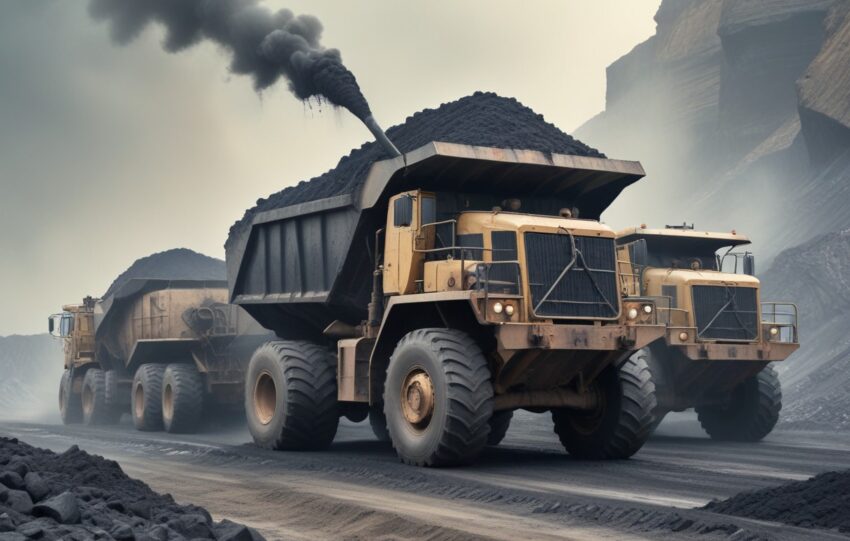
While the broader ASX 200 is down for the year, one corner of the market is quietly booming: ASX coal stocks. The Newcastle benchmark, the thermal coal price that matters most for Australian exporters, has climbed more than 20% in 2026 to around US$132 a tonne after peaking near US$146 in late March.
The trigger was conflict in the Middle East, which disrupted gas supply through the Strait of Hormuz, pushed European gas prices sharply higher, and sent power generators in Asia and Europe back towards coal as a cheaper, more reliable substitute. Coal miners have also gained a political tailwind at home, with pro-coal senator Matt Canavan now leading the National Party. The key question for investors is whether this is a lasting shift or just a short-lived spike. We think it is a bit of both.

What’s Really Driving the Coal Rally
It helps to split the rally into two. The temporary driver is the war premium: once Middle East tensions ease and gas supply normalises, part of coal’s price gain is likely to fade. The durable driver is energy security. Asian economies, led by China, continue to prioritise reliable, affordable power, and China is still building new coal-fired capacity. In our view, that means prices probably ease from current highs once the conflict cools, but stay well above the depressed levels miners suffered through in 2024. For producers, that remains a comfortable backdrop.
Four ASX Coal Miners Cashing In
Whitehaven Coal (ASX:WHC) is the largest of the group, with thermal coal mines in New South Wales and metallurgical coal operations in Queensland. It has secured public credit ratings from S&P, Fitch and Moody’s as it refinances debt from its big Queensland acquisition. That housekeeping lowers funding risk and, in our view, leaves Whitehaven the best-rounded play on both coal types.
New Hope (ASX:NHC) runs the low-cost Bengalla mine in the Hunter Valley. Its latest quarterly showed cash costs falling around 12% to A$74 a tonne, comfortably under guidance. Low costs offer strong protection if prices soften, and a solid dividend record makes New Hope the standout for income investors.
Yancoal (ASX:YAL) is a large, mostly thermal coal producer and one of the sector’s heaviest dividend payers, with shares among the strongest performers this year. The trade-off is that its earnings are the most exposed to thermal coal price swings, so it carries more cyclical risk.
Stanmore Resources (ASX:SMR) is the smallest here and is focused on metallurgical coal in Queensland. That ties its demand more to global steel than to power generation, adding diversification but also exposure to any construction slowdown.
Is It Too Late to Buy ASX Coal Stocks?
The honest answer is that the easy gains have likely been made, but the sector is not obviously expensive. Most of these miners still trade on modest earnings multiples, throw off strong cash, and are actively buying back their own shares, with both Whitehaven and New Hope running on-market buy-backs that lift per-share value. The bigger risk is structural: the International Energy Agency expects global coal demand to plateau and eventually decline as renewables expand, though premium Australian seaborne coal sold into Asia remains far more resilient than that global picture suggests.
In short, this is a cash-harvest story, not a growth one. For income investors comfortable with the ESG questions, low-cost, well-funded producers such as New Hope still look attractive. More cautious or growth-focused investors may prefer to wait for the war premium to unwind and prices to settle before buying in.