Curtin lab work also turned spheronisation fines into product, reshaping the project economics
InVert Graphite (ASX:IVG) has dropped its investor presentation alongside the formal closing steps of the RapidGraphite acquisition, and the numbers in it shift the story from where we left it three months ago.
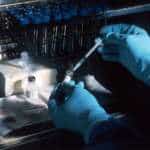
The key new disclosure is that Curtin University laboratory testing on samples of IVG’s own Morogoro natural graphite achieved 98.8% graphitisation after heat treatment, up from around 90.7% in the unprocessed material. Purity reached roughly 99% via the non-acid RapidPulse route. These are the first numbers tying the technology directly to IVG’s own feedstock rather than a generic graphite sample.
There is a second result worth dwelling on. Spheronisation, the shaping step that turns flake graphite into the round particles batteries need, typically loses up to 50% of the input material as fines. RapidPulse catalysts graphitised those fines in the lab, which on paper turns a waste stream into product.
The presentation also confirms the A$2.5 million placement at A$0.03 and a target shareholder vote in late July. Today’s piece is about what the new data does to the investment case.
The 98.8% number changes how investors should read this story
Three months ago, the RapidPulse pitch was a lab process that hit 99% on natural graphite. The unanswered question was whether it would replicate on InVert’s specific Tanzanian flake, which has its own mineralogy and impurity profile.
The 98.8% graphitisation result on actual Morogoro material is the first piece of evidence that the science travels. We think this is the single most important takeaway in the presentation, because the entire vertical integration thesis depends on the technology working on the company’s own rock.
Worth noting though, this is still a single laboratory test on one batch. The vesting milestones from the acquisition agreement, which require 100-gram and 2kg batches at scale, are the ones that actually de-risk the technology.
The fines recovery quietly rewrites the project economics
The spheronisation yield problem is one of the under-discussed economics of the graphite anode business. Lose half your input as fines and the cost per tonne of finished product roughly doubles. Every natural graphite developer wrestles with it.
If RapidPulse can convert those fines into synthetic-equivalent material, it lifts the effective yield of the Morogoro project and gives InVert a second product line. The presentation pitches a blended natural-plus-synthetic anode suited to fast-charging applications.
Our concern is that the blended product story is a long way from a customer purchase order. We would want to see one named off-taker conduct independent qualification work before treating that line as a real revenue lever.
Why the US market angle matters more than the Tanzania project right now
Buried on the commercialisation pathway slide is a flag that IVG will commence formal investigations into US market pathways in the coming months. The market value here is not the Tanzanian flake graphite by itself, it is a non-acid, non-China processing route that fits US supply-chain priorities.
Chinese export controls on graphite have made every Western OEM reframe single-jurisdiction exposure as a strategic risk. The presentation cites the Benchmark Mineral Intelligence figure that 97 new mines and 52 new synthetic plants are required globally by 2035.
For a A$14.7 million market cap business, getting in front of US Department of Energy programs and qualified US battery makers is where re-rating optionality lives, not in the Morogoro drill program.
The Investors Takeaway for InVert Graphite
The presentation gives the bull case more to work with than the prospectus did. Morogoro-specific test results, a credible fines-recovery story, and a US market push together justify a closer look at this name than the share price action suggests.
What investors should now track is narrow and specific. The Centorr furnace commissioning at Curtin is the gating event for the vesting milestones. Whether IVG names a US counterparty for sample testing before year-end is the next signal, followed by the maiden Mineral Resource Estimate on Morogoro.
Readers can find our earlier coverage of the RapidGraphite acquisition mechanics at stocksdownunder. For a micro-cap, IVG has done more in twelve months than most peers manage in three years. Whether that translates into a re-rating depends almost entirely on whether the lab results hold up at pilot scale.