West Cobar Metals’ overcomes an obstacle that has stranded other Australian scandium projects
The hardest part of building a scandium project in Australia has never been finding the metal. It has been paying for the plant that recovers it. West Cobar Metals (ASX:WC1) just told the market its Salazar project in Western Australia may not need the high-pressure circuits that have stranded so many peers.
Recent metallurgical work shows scandium leach recoveries of up to 81% using hydrochloric acid at atmospheric pressure and 95 degrees, a markedly cheaper processing envelope. A separate bioleaching screening test in Estonia pulled out 39% scandium under heap-leach style conditions in 27 days, with 34% achieved inside 96 hours.
Those numbers matter because they reshape the development math. A scandium project that can avoid an autoclave is a fundamentally different beast on capex, operating cost and timeline to first cash. We think this is the bit of the announcement the market should be focused on, not the headline percentages in isolation.
Why the saprolite host rock is doing the heavy lifting
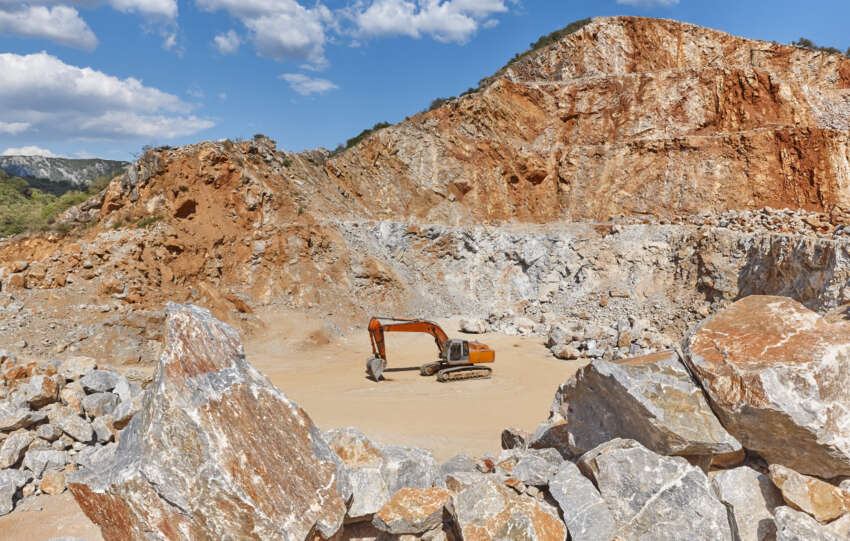
Salazar’s Newmont deposit hosts an Inferred Resource of 15 million tonnes at 153 ppm Sc2O3 in shallow saprolitic clay. The geology is the key. Salazar’s scandium sits in lower iron content saprolitic clays sitting over amphibolite, rather than in iron-rich laterites.
Lower iron content means less acid consumed on unwanted gangue and a more leachable mineralogy. That is the technical reason the testwork at Nagrom in Australia could hit 81% recovery without high pressure. It is also why management can credibly point at a heap leach pathway, which would be unthinkable for most laterite-hosted scandium peers.
The bioleaching result is preliminary but it is the most interesting line
Bioleaching uses microorganisms rather than aggressive chemistry to liberate metals from ore. Of five microorganisms tested by BiotaTec in Estonia, one delivered 39% scandium extraction over 27 days under conditions that mimic a heap leach.
We would not get carried away with a screening result. It is a long road from a 27-day bench test to a commercial heap, and the company itself flagged that scale-up testwork is still required. But if it holds, bioleaching is the lowest-capex, lowest-energy recovery route in the metals industry, and it would put Salazar in a category of one among Australian scandium developers.
The skeptical read is that bioleaching has been promised on plenty of projects globally and rarely delivered at scale. Investors should treat this as optionality, not a base case.
Where scandium sits in the critical minerals story
Scandium is used in aerospace-grade aluminium alloys and high-performance fuel cells, and Western supply is genuinely thin. The US critical minerals list now includes it, and offtake and funding conversations referenced in the announcement reflect that.
Salazar is also a multi-commodity story. The broader resource carries 230 million tonnes at 1,178 ppm TREO across rare earths, plus inferred resources in titanium, gallium and alumina. Today’s announcement is about scandium, but the project’s funding case ultimately rests on stacking those credits inside a single flowsheet.
The Investors Takeaway for West Cobar Metals
Atmospheric leach scandium recovery is the kind of technical result that gets US Department of Defense and EXIM-style funding desks to take a meeting. The next 12 months are about whether West Cobar can translate that interest into a binding term sheet, a scoping or PFS-grade study, and tighter drilling to lift the resource confidence above Inferred.
Our concern is the same one that applies to every junior critical minerals story right now. The metallurgy is the easy part. Financing, permitting and an actual offtake are the hard parts, and the cash position will need to support a multi-year study program. Investors can find more in-depth coverage of ASX-listed critical minerals names at stocksdownunder.
We think the next data point worth waiting for is the closer-spaced drilling around the higher-grade scandium intersections. That will determine whether Salazar is a low-grade bulk play or whether there is a smaller, richer starter pit hiding inside the resource.