Mineralisation runs straight into the Cape Flattery mine boundary, sharpening the case for a low-capital development path
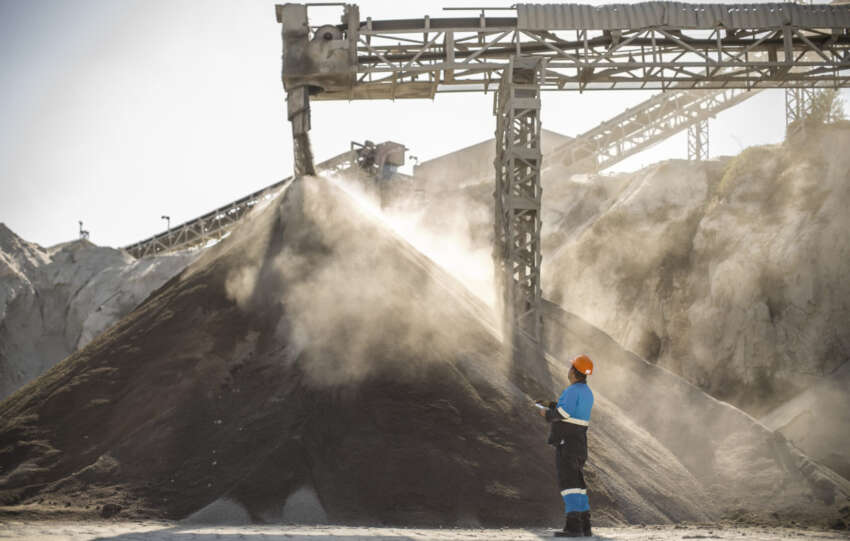
Diatreme Resources (ASX:DRX) has booked a maiden Mineral Resource Estimate of 102.7 million tonnes at 99.04% SiO2 for its Casuarina Resource Area in Far North Queensland. That single line item lifts the company’s global silica sand resource base to 632.8 million tonnes, and it lands the new resource directly against the boundary of the operating Cape Flattery Silica Mine.
The grade matters as much as the tonnage. Iron sits at 0.11%, titanium at 0.14%, alumina at 0.11%. These are the contaminant numbers that decide whether silica sand can be sold into solar photovoltaic glass, which is the highest-margin end market in the industry. Casuarina hits the spec without any heroic processing assumptions.
What makes today’s announcement more than just a tonnage update is the location. Casuarina sits next to the Port of Cape Flattery and immediately adjacent to an existing mine. The development question shifts from how to build infrastructure to how to share it. That is a fundamentally different capital story to a greenfield silica project.
Why a maiden resource next to an existing mine is worth more than a maiden resource anywhere else
Most maiden resources need a port, a road, a power line and a workforce before they become anything other than a number in a slide deck. Casuarina arrives with all of that already built next door. The Cape Flattery Silica Mine has been in operation since 1967 and the dedicated port is already exporting silica into Asian glassmakers.
We think this is the single most important detail in the announcement. A 102.7Mt resource of 99% silica with no clear path to market is a research project. The same resource sitting against an operating mine and a working port is a development project with a credible low capital intensity route.
The contiguous mineralisation also opens a real strategic question. If the sand body physically continues into the existing operation, the most efficient development path may not be a standalone mine at all. It may be an extension or a tolling arrangement that uses existing kit.
The Sibelco relationship is the hidden lever investors should be watching
Global materials group Sibelco has already put around A$56 million into Diatreme’s silica projects and into the company itself. Sibelco holds 26.8% of the joint venture vehicle that owns the broader exploration package, with Diatreme on 73.2%. That is not a passive cornerstone, it is a development partner with operating capability in industrial minerals.
Sibelco’s involvement changes how a maiden resource at Casuarina should be priced. A development partner with global glass and solar customer relationships removes the offtake risk that usually weighs on early-stage silica stories. The skeptical read is that any meaningful upside still requires Sibelco to commit capital to development studies, and that has not yet been formally announced for Casuarina specifically.
Solar demand sets the ceiling, execution sets the floor
Solar PV glass needs low-iron, high-purity silica, and the supply pool for genuinely premium product is narrow. Diatreme’s Northern Silica Project already carries federal Major Project status and Queensland Coordinated Project status, which gives some sense of how the policy machinery views the strategic value of the broader portfolio.
The risks are the usual ones for a developer. Around 40% of the new resource is classified as Inferred, which means more drilling is required before any of it can be relied on for engineering studies. Metallurgical testwork on Casuarina specifically is still benchtop in nature. Capital cost numbers do not yet exist.
Our concern is timing. The silica sand market is moving quickly, and several global projects are competing for the same Tier 1 solar glassmaker offtake conversations. Casuarina’s infrastructure advantage is real, but the window to convert that into binding contracts is not infinite.
The Investors Takeaway for Diatreme Resources
Today’s announcement reframes Diatreme as a multi-asset silica sand developer with a 632Mt resource base, an operating-mine-adjacent maiden resource, an existing global partner, and federal and state policy backing across the broader portfolio. That is a more interesting setup than the market has been pricing.
What we would want to see from here is infill drilling to convert Inferred tonnes into Indicated, bulk metallurgical results that confirm the benchtop work, and a clear signal from Sibelco on whether Casuarina sits inside the joint venture development pipeline or runs as a separate Diatreme-led pathway. Investors can find more in-depth coverage of ASX-listed critical minerals developers at stocksdownunder.
The story is no longer whether Diatreme has the resource. It does. The story is whether management can convert 632.8Mt of high-purity silica sitting next to a port into a funded, contracted, decision-ready project before the next solar capex cycle peaks.