Investment Case Summary
- Camden stockpiles assay up to 23% THM, roughly 10x the Titan Project's average resource grade.
- Pre-stripped 180 acres and turnkey rail and power infrastructure cut capex against the Titan DFS build.
- Monazite and xenotime content positions Camden as a rare US upstream feed for dysprosium and terbium.
Surface stockpiles rich in dysprosium and terbium turn a US$3m deal into a heavy rare earth story
IperionX (ASX:IPX) has closed the Camden acquisition we flagged earlier this year, and the assay numbers that came with completion reframe the whole story. Grab samples from Camden’s surface stockpiles returned Total Heavy Minerals grades up to 21.5%, with earlier one-ton bulk samples running 9.9% and 23.0% THM.
For context, the adjacent Titan Project carries an average Mineral Resource grade of 2.2% THM. Camden’s stockpile material is running 5 to 10 times that grade, and it is sitting at surface, pre-mined and pre-processed by decades of historical silica sand operations.
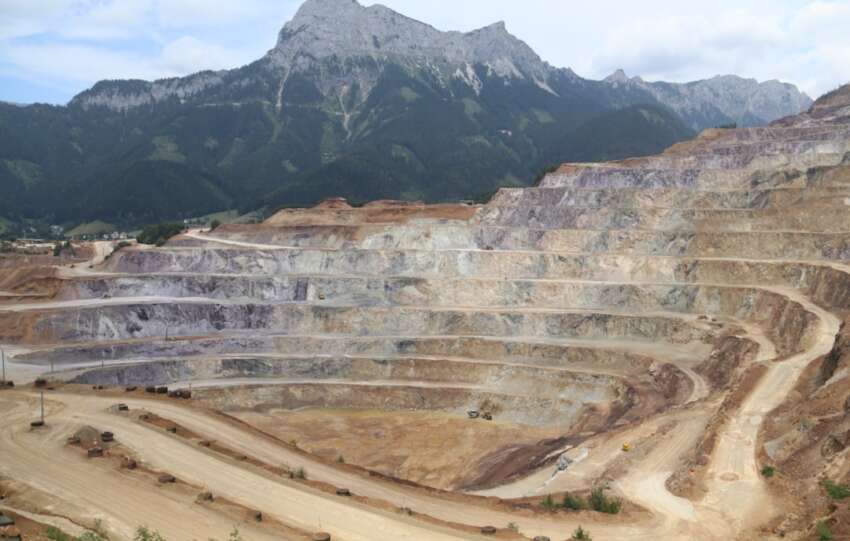
The US$3 million cash outlay we covered when the deal was first announced now looks even sharper. What IperionX has actually bought is around 70 acres of ultra-high-grade stockpiles, roughly 180 acres of pre-stripped Lower McNairy ground, and a turnkey industrial site with rail, high-voltage power, water and natural gas.
Management is now advancing sonic drilling of the stockpiles and pre-stripped zones, with an integrated Camden-Titan techno-economic study targeted for delivery by the end of 2026. That timeline is the near-term catalyst investors will now anchor to.
Why a 10x grade uplift changes the economics, not just the marketing
High grade is not a vanity metric in mineral sands. It is the single biggest lever on capital intensity, plant footprint and operating cost. A feedstock running 10 times the grade of your Resource Estimate means one tenth of the material has to be moved and processed to make the same amount of heavy mineral concentrate.
That flows straight into a smaller front-end circuit, lower diesel burn, less overburden handling and faster time to first product. The Titan DFS, published in June this year, already carried a strong return profile. Camden’s stockpile-first pathway gives IperionX the option to start commercial production on a materially smaller and cheaper plant than the DFS assumed.
The pre-stripped 180 acres reinforces the same point. Overburden removal is one of the largest capex line items in any mineral sands project, and Covia’s silica operators paid for it. IperionX picks up the exposed Lower McNairy for the cost of drilling it out.
The heavy rare earth angle is where the strategic value actually sits
The stockpile assays include monazite and xenotime concentrations averaging around 1,100 ppm in the 19% plus THM samples. Those are the heavy rare earth bearing minerals that host dysprosium, terbium and yttrium.
Those three elements are the choke point in the US rare earth to magnet supply chain. NdFeB magnets used in defence platforms, drones, electric vehicles and robotics cannot hit the required temperature performance without dysprosium and terbium. Yttrium underpins high-temperature ceramics and lasers.
We think the market has been slow to recognise that Camden gives IperionX a credible upstream heavy rare earth position at a time when peers like MP Materials, Energy Fuels and USA Rare Earth are all pulling large US government funding packages for downstream capacity. The upstream feed problem is exactly the gap Camden-Titan now sits in.
How Camden ties back to the powder and press story we have tracked
Longtime followers of the IPX story will recall we have covered the Virginia HAMR powder ramp, the SACMI six-axis press commissioning and the DEVCOM titanium fastener validation that beat Grade 8 steel by 20%. Each of those was a downstream milestone.
Camden closes the loop at the other end. IperionX now has US-sourced titanium and rare earth feedstock potential, a domestic powder plant, a forming press and independently validated qualified components. That is a genuine mine-to-metal position, and very few US critical minerals companies can claim the same.
Our concern remains that turning stockpile assays into a bankable mineral resource still requires drilling, metallurgical test work and customer qualification. The 2026 techno-economic study is where that all has to land.
The Investors Takeaway for IperionX
The next twelve months are execution-heavy. Sonic drilling of the 70-acre stockpiles and 180-acre pre-stripped zones needs to convert grab sample numbers into a formal JORC or S-K 1300 Mineral Resource Estimate. Metallurgical work then has to confirm recoveries for titanium, zircon and the monazite-xenotime fraction.
If those milestones land as management has framed them, IperionX enters the 2026 Camden-Titan techno-economic study with a smaller, cheaper, higher-grade starter case than the current DFS contemplates. That is the setup that could pull US government funding conversations forward, given the heavy rare earth angle. Investors can read our previous coverage of the Camden deal at stocksdownunder.
The skeptical read is that grab samples flatter grade until drilling proves continuity. That is a fair caveat. But the combination of pre-processed stockpiles, pre-stripped ground and turnkey infrastructure at a US$3 million entry price gives IperionX unusual optionality with limited downside if the drilling disappoints.