Investment Case Summary
- Tetragon lists at roughly A$8m with 483 Bcf of already-discovered gas and A$5.5m cash.
- Onshore SC-82, not the Halcon Tcf story, is the fastest realistic path to cash flow.
- Offshore upside depends entirely on landing a major farmout partner within eighteen months.
A Triangle Energy spin-out enters the Philippines gas story at ground floor, with farmouts doing the heavy lifting
Tetragon Energy (ASX:TET) is set to list on the ASX in July 2026 as a spin-out from Triangle Energy, carrying three Philippines exploration permits and a plan that leans on farmouts to fund the expensive work. The IPO raises A$4 million at 20 cents, adds A$1.5 million seeded by Triangle, and leaves the company with a market cap of roughly A$8 million and cash of A$5.5 million.
The pitch is that investors are getting ground-floor entry into 483 Bcf of already-discovered gas across two of the three blocks, plus multi-Tcf exploration upside, at an enterprise value of about A$0.01 per Bcf of net 2C resources. On paper, that is one of the cheaper resource entries the ASX has seen this year.
The catch is that Tetragon holds 37.5% and operator status on the two offshore Sulu Sea permits, and needs partners with deeper pockets to actually drill anything meaningful. The onshore SC-82 permit, which Tetragon owns outright, is the cheapest and fastest path to first revenue.
The Philippines gas price is doing a lot of the work here
Domestic gas in the Philippines currently prices at around US$18 per mcf, tied to LNG import netbacks after the Malampaya field ran down. That is a genuinely high price by global standards, and the reason is structural. The country has a 110-million person population, a chronic power deficit, and a government that has elevated sovereign energy capability to a national priority.
Recent discoveries by Prime Energy at Malampaya East and Carmargo added 340 Bcf of recoverable gas between them, which validates the geology but does not close the supply gap. That leaves room for a small operator like Tetragon to matter, provided it can actually deliver molecules to grid.
The fiscal terms are also unusually clean. Stable Department of Energy service contracts, an ANZ free trade agreement, and a US mutual defence treaty backdrop make this one of the more investor-friendly hydrocarbon jurisdictions in the region.
SC-82 onshore is the near-term catalyst, not the Tcf dream
Most of the presentation real estate goes to the Halcon prospect on SC-80, a 2.7 Tcf mid-case trap that could theoretically run to 20 Tcf on the high side. That is the number that will pull headlines, but it is also the number furthest from cash flow. Halcon needs seismic reprocessing, a farmout to a major, then a deepwater well most likely in 2028 at the earliest.
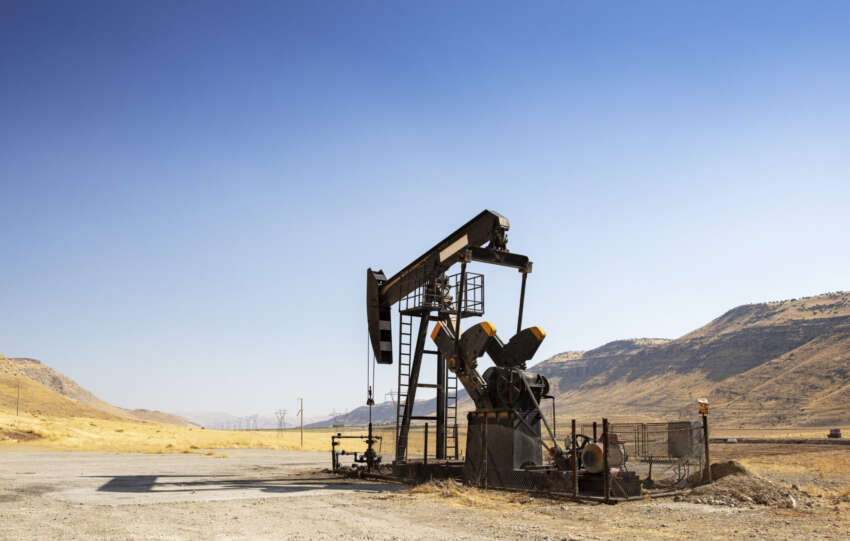
The onshore SC-82 permit is a different story. It sits 250km from Manila, contains the Nassiping-2 gas discovery already tested in 2012, and is less than a kilometre from the Luzon power grid. A low-cost onshore well feeding gas-to-power at US$18 per mcf is a genuinely investable near-term catalyst.
We think investors will end up caring more about SC-82 than the market currently gives credit for. The offshore Tcf story is optionality. The onshore permit is where a company this size could realistically generate its first cash flow.
The farmout dependency is the single biggest risk
Tetragon’s plan is explicit about not funding an offshore well from its own balance sheet. That is the correct call given A$5.5 million in cash, but it means the entire offshore thesis rests on convincing a major to carry Tetragon through drilling costs after seismic reprocessing wraps up in the first half of 2027.
Farmouts of unproven deepwater acreage are not guaranteed, and the ones that happen often come with terms that dilute the original operator’s economics. Sunda Energy, Philodrill and PXP Energy are already in as partners, but none of them are the deep-pocketed drilling entity Tetragon ultimately needs.
The skeptical read is that Halcon sounds like a majors-only farmout target on paper, but majors have been retreating from frontier exploration for the better part of a decade. That could push the timeline out, or force worse terms than the current plan implies.
The Investors Takeaway for Tetragon Energy
At an A$8 million market cap with A$5.5 million in cash, the downside is bounded by working capital and the upside is bounded by whether a major eventually shows up to carry the offshore drilling. Not a bad risk-reward if you can stomach the wait, but returns will be lumpy and event-driven.
We think the catalysts that actually matter are the SC-82 aero gravity and magnetics survey through Q4 2026, followed by the SC-82 farmout and gas-to-power MoU in the first half of 2027. Those events convert Tetragon from a story stock into an operating story, well before any Halcon well is spudded. Readers looking for more coverage of ASX-listed junior energy names can visit stocksdownunder.