Investment Case Summary
- The Sydney facility supports A$98m of revenue at 70% gross margin against a A$43m market cap.
- August 2026 FDA HDE decision for dCCA is now inside the final weeks of the review clock.
- Germany's G-BA funded trial delivers A$47m of value accretion without OncoSil writing the cheque.
A 70% gross margin at scale reframes how the Macquarie Park manufacturing build should be valued
OncoSil Medical (ASX:OSL) has dropped its mid-July investor presentation, and for a company that spent years being a regulatory story, this deck reads like a commercial one. The headline number is a A$98 million revenue opportunity from the new Sydney manufacturing facility at roughly 70% gross margin at full capacity. Against a A$43 million market cap and A$9.3 million of cash, those are numbers worth pausing on.
The deck also pulls forward the timing on the US FDA Humanitarian Device Exemption for distal cholangiocarcinoma, with management now flagging expected approval in August 2026. That is the same 45-day review clock we wrote about earlier this year, now inside its final weeks.
What sits underneath is more interesting than either number in isolation. This is a company with 34-plus country approvals, two clinical trials that hit their primary endpoints, a home-market TGA tick, an imminent US approval and a manufacturing facility about to switch on. At A$1.40 and an enterprise value of A$34 million, the market has not really re-rated it for any of that.
The A$98m Sydney facility is the piece the market keeps ignoring
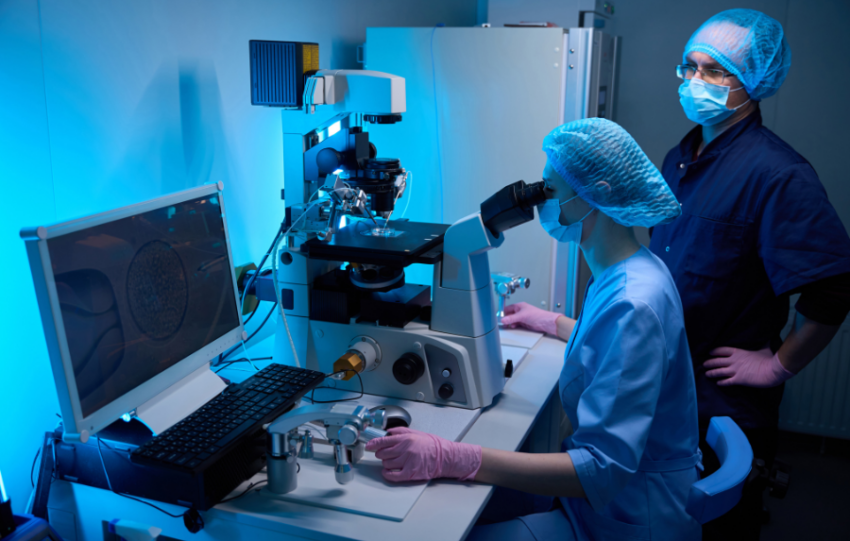
OncoSil has invested A$2.1 million into the Macquarie Park facility with partner Cyclotek. The presentation puts theoretical revenue capacity at A$98 million annually at approximately 70% gross margin. That is a capital intensity below 5%, which for a medical device business is genuinely unusual.
The strategic logic sits in the physics. Phosphorous-32 has a 14-day half-life, so the device cannot be warehoused like a conventional consumable. Bringing production in-house at scale is what turns the European commercial ramp into something with a defensible margin structure.
Three validation cycles are complete and more than 50 validation doses have been produced. Commercial production is expected in the second half of calendar 2026, pending final regulatory sign-off. If that lands on time, FY27 becomes the first year where the gross margin story is actually visible in the numbers.
Germany’s G-BA trial is the sleeper catalyst worth understanding
The G-BA is Germany’s Federal Joint Committee, the body that decides national reimbursement. It is now funding a randomised trial pairing the OncoSil device with chemotherapy against chemotherapy alone. The Company puts total value accretion from this initiative at A$47.1 million.
That number breaks down into A$5.6 million of trial-period sales, A$6.5 million of ancillary commercial sales at G-BA sites, and A$35 million of avoided trial cost had OncoSil funded the study itself. A government-funded Phase III generating Level 1 evidence, without OncoSil writing the cheque, is a rare setup for a microcap.
The skeptical read is that G-BA processes are slow and outcomes are years away. Fair. But the top 40 German pancreatic surgery centres represent a serviceable market of roughly A$168 million annually, and those sites are already NUB-approved for reimbursement.
The August FDA decision is now a scoreboard, not a story
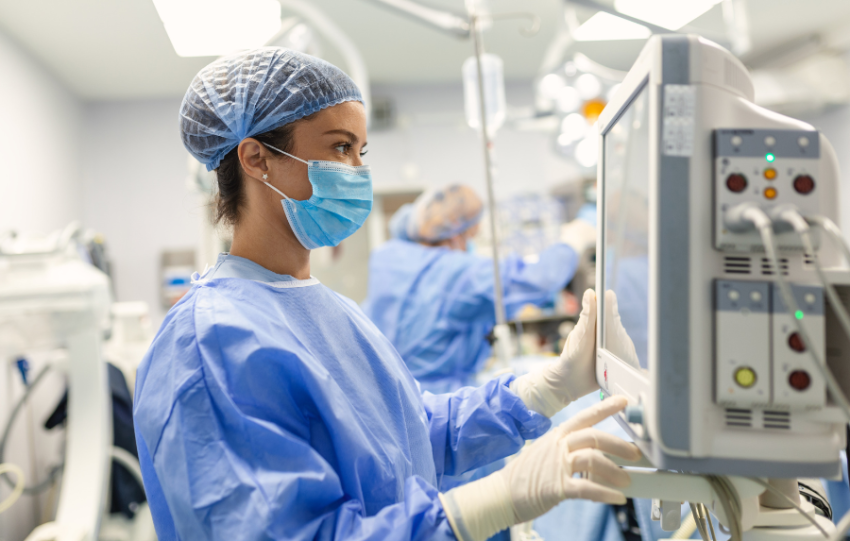
On 3 June the FDA confirmed all outstanding questions on the HDE for dCCA had been satisfactorily addressed. Final labelling and post-market documentation were submitted on 2 July. Management is guiding to an approval decision in August 2026, which puts the binary event roughly four to six weeks from now.
We think the market is under-appreciating the reference value of a US HDE approval. The dCCA patient population is small by design, but a US Class III approval in any oncology indication opens the door to billing pathways, KOL access and the pancreatic cancer conversation with the FDA that has always been the bigger prize.
The Investors Takeaway for OncoSil Medical
The next 60 days carry more concentrated newsflow than most microcaps see in a year. FDA HDE approval, commercial production sign-off at Macquarie Park, and the Australian commercial launch all sit in a tight window. Any two of those hitting on time would materially change the valuation setup.
Our concern is that OncoSil has historically been a company where the milestones land but the market takes longer to notice. The A$43 million market cap against a A$98 million revenue opportunity suggests that pattern has not yet broken. Investors can read our previous coverage on the FDA clock at stocksdownunder.
The article to write in October is either about a company that finally got paid for a decade of grinding, or one where the market let itself get excited too early. August tells us which.