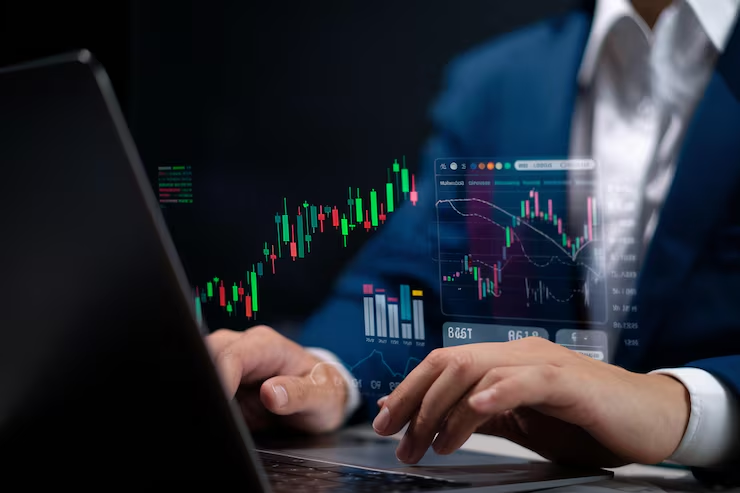
Retail trading apps have transformed how younger investors interact with the stock market. What once required deliberate research and long-term thinking is now compressed into fast, interactive sessions driven by notifications and real-time data. While this accessibility has clear benefits, it also introduces a less discussed issue – decision fatigue caused by constant engagement. Many users feel productive, yet their outcomes often suggest otherwise.
- Limit exposure to constant price updates to preserve decision quality
- Focus on fewer, higher-conviction trades instead of frequent activity
- Disable non-essential notifications to reduce impulsive actions
- Treat trading sessions as planned events, not ongoing background activity
Why Gamified Trading Feels Productive but Leads to Poor Decisions
Trading apps are designed to encourage interaction. Bright visuals, real-time feedback, and instant execution create a sense of control and progress. However, this structure often rewards activity over strategy, pushing users toward unnecessary decisions.
The key issue is not access to tools, but how often they are used. Frequent interaction increases cognitive load, leading to quicker and less thoughtful decisions. Over time, this reduces overall performance, even if users feel engaged.
The Rise of Micro-Decision Overload in Trading Apps
Modern platforms expose users to continuous streams of data. Each notification or price change creates a small decision point, which adds up throughout the day. This accumulation is where decision fatigue begins to impact judgment.
Push Notifications and the Illusion of Urgency
Notifications are designed to prompt immediate action. A stock moving a few percentage points may not require intervention, yet alerts frame it as urgent. This leads to reactive trading instead of planned execution.
Real-Time Data Streams and Cognitive Burnout
Constant data visibility creates the impression that more information leads to better outcomes. In reality, it overwhelms the brain’s ability to prioritize. Investors begin to rely on instinct rather than structured analysis.
Why More Information Does Not Mean Better Outcomes
Access to more data can dilute focus. Instead of reinforcing key insights, it introduces noise. This makes it harder to identify meaningful trends and increases the likelihood of overtrading.
How Gamification Mechanics Reinforce Risk-Taking Behavior
Gamification elements subtly encourage repeated engagement. Visual rewards, progress indicators, and streaks create feedback loops that mimic gaming environments. These mechanics can shift focus away from disciplined investing.
Many of these patterns resemble other high-engagement digital environments, including poker online for real money, where frequent decisions and rapid feedback influence user behavior. The similarity lies not in the activity itself, but in how users respond to risk and reward cycles.
Key behavioral drivers include:
- Reward loops and dopamine-driven trading – small wins reinforce continued activity
- Visual feedback and instant gratification bias – users prioritize short-term outcomes
- The psychology behind frequent trade execution – action feels productive even without strategy
When Trading Behavior Starts Mirroring High-Risk Decision Environments
As engagement increases, trading behavior can shift toward patterns typically seen in high-risk decision environments. This is especially common among newer investors who rely heavily on app-driven cues.
| Behavior Pattern | Trading Context | High-Risk Environment Parallel |
| Rapid decision-making | Intraday trading | Short-cycle betting decisions |
| Emotional reactions | Panic selling | Loss-driven escalation |
| Overconfidence after wins | Aggressive position sizing | Risk escalation after streaks |
- Skill vs Chance in Short-Term Market Moves: Short-term price movements are influenced by numerous variables. While skill plays a role, randomness increases as timeframes shrink. This makes outcomes less predictable than many users assume.
- Loss Chasing and Escalation Patterns: After losses, users often attempt to recover quickly. This leads to larger positions or riskier trades. Over time, this pattern can compound losses instead of correcting them.
- Why Fast Decisions Feel More Rewarding Than Rational Ones: Fast decisions provide immediate feedback. This creates a stronger emotional response compared to long-term strategies. The result is a bias toward speed over accuracy.
Practical Strategies to Reduce Decision Fatigue in Trading
Managing decision fatigue requires structure. By reducing unnecessary inputs and defining clear rules, investors can improve consistency and outcomes.
Setting Predefined Trading Rules and Limits
Establishing rules before entering trades removes emotional bias. This includes entry points, exit targets, and maximum risk per position.
Step-by-Step Guide to Building a Trading Framework
- Define your time horizon – decide whether you are trading short-term or investing long-term to align decisions.
- Set risk limits – determine how much capital you are willing to lose per trade to protect your portfolio.
- Choose a limited number of assets – focus improves analysis and reduces noise.
- Establish entry and exit rules – plan actions in advance to avoid emotional decisions.
- Review performance weekly – structured reflection helps identify patterns and adjust strategy.
Reducing App Notifications and Screen Time
Limiting exposure to constant updates helps maintain clarity. Scheduled check-ins are more effective than continuous monitoring.
Pro tip: Allocate fixed time windows for trading activity instead of reacting throughout the day.
Long-Term Positioning vs Constant Monitoring
Long-term strategies reduce the need for frequent decisions. Investors who adopt this approach often experience less stress and more consistent results.
| Do | Don’t |
| Set clear trading rules | Trade based on impulse |
| Limit app notifications | React to every alert |
| Focus on long-term trends | Obsess over minute-by-minute changes |
What Smarter Investors Are Doing Differently in 2026
Experienced investors are shifting away from constant engagement. They prioritize structured decision-making and reduce exposure to gamified features. This approach leads to more consistent performance and less cognitive strain.
Many are also integrating risk management tools and limiting daily trading activity. The focus is on quality decisions rather than quantity.
Building Discipline in a Gamified Trading Environment
Gamified trading environments are highly effective at increasing engagement, but they also introduce subtle risks that can impact decision quality over time. Understanding how these systems influence behavior allows investors to step back and approach the market with more intention. Instead of reacting to every signal, disciplined traders focus on structure, timing, and long-term positioning.
Ultimately, maintaining control in a fast-paced digital environment comes down to reducing unnecessary decisions and sticking to a defined strategy. Investors who recognize these dynamics early are better positioned to protect their capital and achieve more consistent results.