Nanoveu’s announcement today that it will acquire Spinoff Robotics saw shares rise over 20% this morning. Clearly investors think the acquisition marks a decisive shift in the company’s trajectory…and they’re right.
For several years, Nanoveu has been known primarily for its semiconductor work through EMASS, its visualisation technologies and its materials science portfolio. The acquisition of Spinoff now brings the company into a very different strategic posture. Nanoveu is positioning itself as a vertically integrated drone‑autonomy platform with ownership of every layer from silicon to airframe. In our view, this is the most significant strategic move the company has made since the ECS‑DoT program began.
Why Nanoveu is buying Spinoff Robotics: To Build a Structural Moat
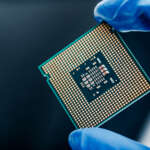
Nanoveu is developing the ECS‑DoT chip, which had been developed by EMASS before it was acquired by Nanoveu last year. The ECS-DoT chip is an ultra‑low‑power RISC‑V system‑on‑chip designed for on‑device AI inference at sub‑milliwatt power.
But most investors knew that already. Until now, Nanoveu has been reliant on external drone manufacturers to provide the deployment surface for that silicon. Spinoff Robotics changes that equation. The company brings in‑house airframe design, aerodynamics, flight control, mechanical engineering and sensor integration. It also brings two validated drone platforms, ALICE and METRON, both of which have already been deployed with tier‑1 Singaporean customers. Nanoveu now controls the entire autonomy stack, and that matters because it allows the company to engineer ECS‑DoT into the drone from the outset rather than bolting it on as a payload.
This is a structural moat if ever there was one. When silicon, airframe and sensing are designed together, the result is a platform that can optimise power envelope, sensor placement, control‑loop latency and mission‑specific performance in ways that retrofitted systems cannot match.
The company is effectively moving from being a chip supplier to being a full‑stack drone‑autonomy company with proprietary reference designs for defence, hyperscaler security, airport FOD detection and hazardous‑environment inspection.
Spinoff Robotics Is Perfectly Positioned Amidst the Global Defence Procurement Rush
The acquisition also arrives at a moment when global defence procurement is accelerating. Governments are mandating sovereign drone capability, and recent conflicts have exposed the vulnerability of GPS‑dependent and RF‑reliant aerial platforms.
ALICE, Spinoff’s tethered drone, is engineered specifically for these environments. It operates without GPS, without RF and without a hijack surface. It is powered from the ground, which removes the weight of power electronics from the airframe and frees lift budget for heavier sensor payloads. It can hold a fixed position with sub‑degree stabilisation under wind and tether tension. It is deployable by a single operator in under an hour. These characteristics make it suitable for forward‑base ISR overwatch, critical‑infrastructure perimeter security and airport runway monitoring.
METRON, the second platform, is equally important. It is a sub‑millimetre photogrammetry system with a pre‑trained deviation‑detection pipeline. It can baseline a scene in 3D and detect anomalies in real time without streaming raw video off‑platform. The analytics run entirely on ECS‑DoT. This is a meaningful differentiator in environments where bandwidth is constrained or where off‑platform transmission is undesirable. METRON has already been validated by Singapore’s Land Transport Authority and is suited to nuclear inspection, hyperscaler cooling‑tower monitoring and runway FOD detection.
The combined platform gives Nanoveu a credible entry point into four high‑value verticals. Defence is the most obvious of them. The global military drone market is forecast to reach roughly US$98b by 2033, and the company now has a pathway to field tactical‑grade drones with GPS‑free navigation, swarm coordination and on‑device AI.
The second is hyperscaler data‑centre security. Each new data facility requires continuous perimeter and thermal‑anomaly monitoring. ALICE and METRON can provide persistent overwatch without the bandwidth burden of streaming video.
Third is airport FOD detection – a market forecast to reach US$1.5b by 2034. Tethered drones offer a regulatory advantage because they avoid the airspace‑conflict issues that prevent free‑flying drones from operating airside.
Finally on our list, nuclear and hazardous inspection METRON’s sub‑millimetre accuracy and ALICE’s persistent hover capability allow the system to operate in environments that are inaccessible or unsafe for human inspectors.
The acquisition also brings talent. Dr Chee How Tan, Spinoff’s co‑founder and a specialist in embodied perception for lightweight aerial robotics, will join Nanoveu. His expertise in mechanical design, fluid dynamics and autonomous navigation strengthens the company’s internal capability and provides continuity for the ALICE and METRON platforms. The performance rights structure tied to revenue milestones and IP integration aligns incentives with commercial execution.
So now what?
The near‑term roadmap is clear. Nanoveu will continue live drone trials of ECS‑DoT with a specialist US partner, validating flight‑endurance simulation results in real‑world conditions. It will develop next‑generation edge‑AI functions for drones, including multi‑chip configurations, GPS‑free navigation and counter‑drone detection. It will engage directly with drone OEMs, system integrators and end users across defence and commercial markets. And it will begin designing new airframes purpose‑built around ECS‑DoT, now that the engineering capability is in‑house.
In our view, this acquisition transforms Nanoveu from a semiconductor and materials science company into a vertically integrated drone‑autonomy platform with a credible pathway into defence, hyperscaler security and industrial inspection. The company now owns every layer of the stack: silicon, airframe, sensing, autonomy algorithms and mission‑specific applications. That level of integration is rare in the drone market and positions Nanoveu to ship validated reference designs into some of the highest‑value segments of the edge‑AI economy.
Pitt Street Research directors own shares in Nanoveu.