For investors who missed the run in Novo Nordisk shares, Eli Lilly (NYSE:LLY) appeared to be the next best thing. And perhaps those who bought into Eli Lilly would have less regrets with Novo Nordisk shares having shed over 70% since their all time high in June 2024. and Eli Lilly shares gone relatively well – albeit a modest 9%.
On a market cap basis, Eli Lilly is several times larger than Novo Nordisk and is actually the world’s largest pharmaceutical company. Like Novo Nordisk, it has had a historical business aiding people with diabetes and obesity, but also has oncology, immunology and neuroscience drugs too.
It hasn’t been setback free, but the latest quarterly results (issued last week) were significant cause for optimism. Not just because of booming sales, but a crucially important FDA green light.
Introduction to Eli Lilly
This company, headquartered in Indianapolis, was named after the Civil War Union Army Veteran and pharmaceutical chemist who founded the company in 1876. It has been a ground-breaking company for the bulk of its existence, being the first to mass produce a polio vaccine and human insulin. It was also the first pharmaceutical company to adopt the concept of straight-line production – an industry standard nowadays.
The company made $65.2bn in revenue during 2025, more than double 2 years prior, and a $20.6bn profit, with its key revenue drivers being diabetes drugs Humalog and Trulicity. It is eyeing off future opportunities, particularly using radiopharmaceutical drugs to treat cancer.
It is up nearly 400% in 5 years and there are good reasons why.
A rival to Ozempic?
Eli Lilly has a drug called tirzepatide that regulates blood sugar levels and thus helps people with diabetes. In May 2022, it was FDA approved as an adjunct to diet and exercise to improve glycemic control in adults with Type 2 diabetes, under brand name Mounjaro. 18 months on, the FDA approved it as an obesity treatment, under the brand name Zepbound. Yes, the FDA has endorsed it as an obesity-killer. Specifically, it is approved for adults with obesity or who are overweight with at least one weight-related condition.
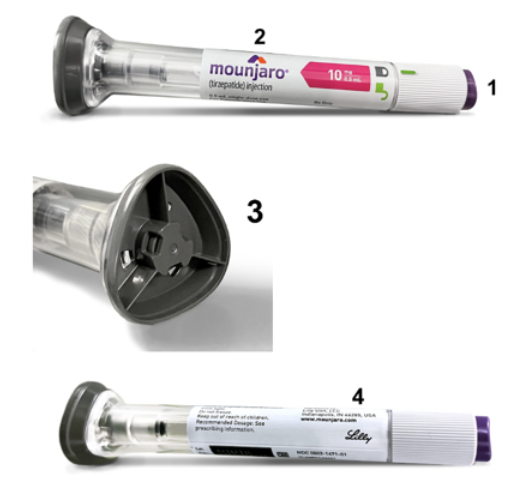
The drug was shown in a Phase 3 clinical trial to help people lose up to 52 pounds in 16 months – results unparalleled by any other drug. Zepbound is a GLP-1 agonist like Ozempic is, but it imitates a second hormone, called GIP, which – along with reducing appetite – may also improve how the body breaks down sugar and fat.
There has been demand for these drugs, just like Ozempic. In 2023, Eli Lilly made US$5.1bn from Mounjaro in the first full year of sales and 2024 sales were $11.5bn. In 2025, Mounjaro and Zepbound sold a combined $36.5m and were more than half the company’s sales.
There’s been good news and bad news
Eli Lilly is well positioned to make a mark in the weight-loss drug market. Being first to market will help it build trust and entrench loyalty. Remember that Ozempic is only approved for diabetes and not for obesity. Also, as a company with established facilities, Eli Lilly will be better positioned to meet demand through its existing facilities.
It also has the balance sheet to invest – it told investors in May 2024 it would invest US$5.3bn in a manufacturing plant in Indiana to expand the production of Zepbound, along with other medicines. And even before the investment, the ongoing supply squeeze has ended. It is not the company saying that, but the FDA which had put Zepbound on the list of medicines with shortages, then took it off after nearly 2 years on the list.
But there have been some hiccups along the way. In August 2025, results of a clinical trial for a new experimental pill (orforglipron) was less effective than anticipated – and less effective than Zepbound. Eli Lilly still hailed the results as a success and pledged to submit to the FDA for approval.
This was a direct move to counter a rival pill developed by Novo Nordisk which the FDA is already considering and showed numerically higher weight loss numbers. Both Novo Nordisk and Eli Lilly think pills will be the future – why inject yourself when you can just take a pill once a day without any regard to food or water?
The question of pricing has also been a pertinant one. Zepbound will cost consumers US$1,060 for a month’s supply and this may not be covered by insurance companies, let alone by Medicare. In other countries it is cheaper, but the Trump administration is pressuring US medical companies not to dump the drugs on the cheap in markets like the UK. The UK price was nearly tripled following pressure and it may not appear on Australia’s PBS.
However, if it as effective as has been shown in the clinical trials, people will find a way to afford it. Also, as a high-growth company, there is the risk investors may lose confidence in the company if growth slows down substantially. And the company, like Novo Nordisk, will need to deal with fake and compounded versions of its medications. In fact, it is already fighting lawsuits with med spas purportedly selling fakes.
2026 has begun well and the best could be yet to come
But 2026 has begun well with Q1 results that pleased investors. Sales were $19.8bn, over 50% ahead of last year, and its bottom line was up 170% on an underlying basis. Its new obesity drug Foundayo passed a Phase 3 trial and got regulatory approval. How is Foundayo different? It can be taken any time of day, without any food or drink restrictions. Full year guidance was hiked by $2bn to $80-83bn and for $33.50-35.00 EPS, which would be roughly $32-33bn.
There’s growth ahead and it isn’t that costly.
For CY26, consensus estimates agree with guidance, calling for $33.60 EPS and $85.3bn revenue. For 2027, $96.8bn revenue and $41.59 EPS, then $109.5bn revenue and $49.37 EPS for 2028. The mean target price is US$1,202.17 per share, up over 20% from the current price. Its P/E may suggest modest caution with 27x for CY26 but it has a PEG of 1.3x
On the basis of its PEG multiple, you could conclude that Eli Lilly is worth a buy. Yes, ideally it’d <1x but this is pretty good for a US company let alone one seeing such fast growth.
The risk is competition, because there are several companies working on GLP-1 drugs like Pfizer and Amgen, but only Novo Nordisk is a realistic competitor right now and it’d be fair to say it still has the lead in incumbancy even if Eli Lilly is catching up. For now though, the question is not about one eliminating the other but to what extent the profit pool will be divided.
Even if you just sit on the sidelines here, Eli Lilly is one to watch.