If you’re considering investing in bitcoin in 2026, you’re investing in an asset has done something in the past twelve months that very few assets in history can claim. Bitcoin reached an all-time high of approximately US$126,200 in October 2025, pulled back around 30% to trade near US$78,000 in April 2026, and throughout that entire arc, institutional and retail investors kept buying. Its market capitalisation sits at roughly US$1.33tn, placing it firmly among the world’s most valuable assets. Whether that valuation is justified, sustainable, or simply the product of speculative momentum is the question every serious investor should be asking before allocating capital to it.
What is bitcoin?
Bitcoin is a decentralised digital currency (or a cryptocurrency), without a central bank or single administrator, that can be sent from user to user on the peer-to-peer bitcoin network without the need for intermediaries. Transactions are verified by network nodes through cryptography and recorded in a public distributed ledger called a blockchain. Bitcoin has garnered attention for its use in transactions where anonymity and security are valued, as well as for investment opportunities, leading to widespread discussions about its potential impacts on the global financial system.
Bitcoin, conceived by an anonymous person or group of people under the pseudonym Satoshi Nakamoto, has its origin marked by the publication of a white paper in 2008, titled “Bitcoin: A Peer-to-Peer Electronic Cash System.” This revolutionary document outlined a decentralized digital currency system, intended to eliminate the need for intermediaries like banks. The first software was released in January 2009, and Nakamoto mined the inaugural block of bitcoins, famously known as the Genesis Block, embedding a timestamp and a commentary on banking bailouts.
Over the years, the cryptocurrency transitioned from an obscure digital novelty to a significant player in financial markets, challenging traditional economic structures. Its history has been characterized by volatile price swings, regulatory scrutiny, and a growing acceptance among both consumers and businesses as a means of payment and investment.
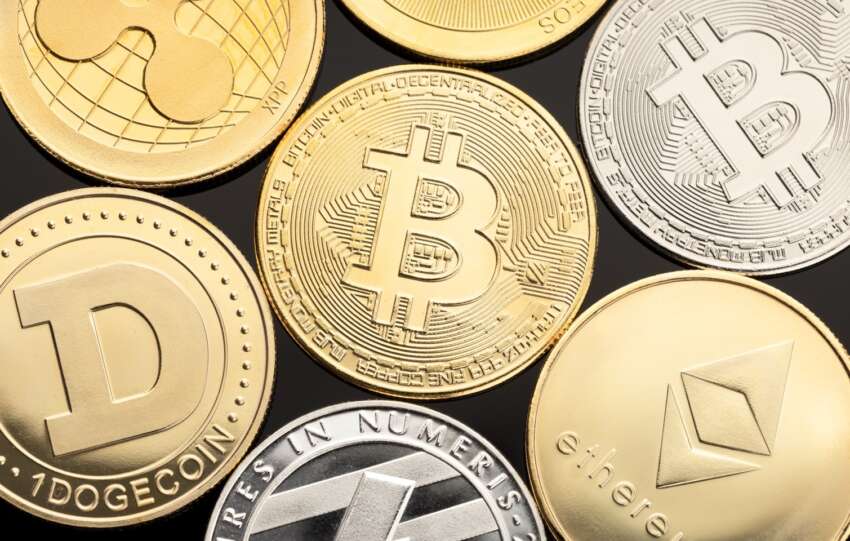
Bitcoin has also paved the way for the development of other cryptocurrencies, known as altcoins, which utilize similar blockchain technology but with different features and goals. Some notable examples include Ethereum, Litecoin, and Ripple.
Spectacular returns
Those who have held Bitcoin over meaningful timeframes have, in most cases, been rewarded handsomely. Over the past decade, the asset has returned in excess of 15,000%, a figure that dwarfs the performance of virtually every other investable asset class over the same period. Even investors who bought at cyclical peaks have typically recovered their positions if they held long enough, though that requires tolerance for drawdowns that have, at various points, exceeded 70%.
The more recent picture is instructive. Bitcoin ended 2025 approximately 30% below its October all-time high, a correction that, for traditional assets, would constitute a bear market. For Bitcoin, it is a relatively routine mid-cycle consolidation. The asset has since stabilised and, as at late April 2026, is trading in the high US$70,000 range with its market cap near US$1.33 trillion. The five-year return remains comfortably above 1,000%, and the 10-year return is one of the most compelling in recorded financial history.
In our view, the performance history is real and relevant, but it cannot be the primary basis for an investment decision. Markets are not obligated to repeat the past, and Bitcoin’s previous returns were earned during a period of near-zero interest rates, surging institutional adoption, and an almost entirely permissive regulatory environment. Several of those tailwinds are now structural features of the market rather than novel catalysts.
Why might you consider investing in bitcoin in 2026?
Several structural arguments support Bitcoin’s investment case. The most durable is supply scarcity: the protocol caps total supply at 21 million coins, meaning that unlike any fiat currency, no central authority can inflate the supply in response to fiscal pressures. As adoption broadens, this fixed supply creates a mathematically predictable scarcity dynamic that is unlike anything available in traditional markets.
Secondly, Bitcoin’s global accessibility and resistance to censorship give it utility as a store of value in jurisdictions where traditional banking is unreliable, currency debasement is a real risk, or capital controls are a practical concern. This is not merely a theoretical argument; remittance flows and savings behaviour in countries with weak currencies demonstrate genuine demand for Bitcoin as a functional alternative.
Thirdly, the regulatory environment in the United States has shifted materially in favour of the asset class. The appointment of SEC Chairman Paul Atkins, whose “Project Crypto” initiative has delivered a coherent token taxonomy and has explicitly clarified that most crypto assets are not securities, represents a structural improvement in the legal certainty surrounding Bitcoin. The US government has also established a strategic cryptocurrency reserve, initially seeded with forfeited assets, though proposals to expand it have attracted debate. This shift from “regulation by enforcement” to “regulation by clarity” is, in our view, meaningfully positive for long-term institutional participation.
That said, the excitement and attention Bitcoin attracts can itself distort decision-making. Fear of missing out is not an investment thesis. Investors who allocate capital to Bitcoin primarily because it has risen strongly recently are taking on a very different risk than those who have conviction in its long-term store-of-value proposition.
How to Invest in bitcoin
For Australian investors, there are several practical avenues. The most direct is to purchase Bitcoin through a licensed cryptocurrency exchange such as Coinbase, Binance, or Kraken, which provide wallet services and allow investors to hold the asset directly. This approach offers maximum control but also places the custody burden entirely on the investor, including responsibility for securing private keys.
For those who prefer regulated, exchange-listed exposure, Bitcoin ETFs are now available in several major jurisdictions including the United States, and the Australian market continues to develop its crypto ETF product range. These products allow investors to gain price exposure without directly managing a digital wallet, and they can be held within standard brokerage accounts. Futures contracts are also available for those seeking speculative exposure without direct ownership, though they carry roll costs and are generally more appropriate for sophisticated investors.
Bitcoin ATMs exist in most major Australian cities and allow cash-to-Bitcoin conversion, though they typically carry materially higher transaction fees than online exchanges and are more convenient than economical. Peer-to-peer platforms offer additional optionality but require greater caution given the elevated fraud risk in unregulated bilateral transactions.
Regardless of the access method chosen, investors should satisfy themselves that any exchange or platform they use is properly licensed, holds client funds in segregated accounts, and maintains credible insurance or capital reserves. The collapse of FTX in 2022 remains the starkest example of what happens when institutional-grade custody standards are not applied to exchange operations.
Bitcoin halving? What is going on
Bitcoin’s protocol includes a built-in mechanism that reduces the reward paid to miners for validating new blocks by half approximately every four years. This event, known as the halving, is a core component of Bitcoin’s deflationary design: it progressively restricts the rate at which new supply enters circulation, reinforcing the scarcity that underpins much of the asset’s store-of-value argument. The most recent halving occurred in April 2024, reducing the block reward from 6.25 BTC to 3.125 BTC. The next halving is expected in 2028.
Historically, each halving has been followed by a significant price appreciation cycle, typically with a lag of six to eighteen months as the reduced supply interacts with ongoing or increasing demand. Bitcoin’s October 2025 all-time high occurred within that post-halving window, consistent with prior cycles. This does not guarantee that the pattern will repeat, but it provides a framework for understanding the asset’s supply dynamics that is grounded in the protocol itself rather than sentiment.
There are secondary implications worth considering. As block rewards decline, miners must rely increasingly on transaction fees to sustain their economics. If fee revenue does not compensate adequately for reduced block rewards, the network could see consolidation among large mining operations, raising questions about decentralisation. The counterargument is that increasing transaction volumes and a rising Bitcoin price offset the per-block reward reduction, maintaining miner incentives. Both dynamics have played out in previous cycles, and the evidence to date supports the latter.
How does investing in Bitcoin compare to investing in stocks?
Investing in Bitcoin and investing in equities are fundamentally different activities. Equities represent ownership in a business that generates revenue, employs people, and is subject to analysis through earnings, valuations, and competitive dynamics. Bitcoin generates no cash flow, pays no dividend, and cannot be valued using discounted cash flow analysis. Its price is a function of supply, demand, and collective belief in its future utility and scarcity properties.
This distinction is not a criticism of Bitcoin; it is simply an accurate description of its nature. The appropriate analytical frame is closer to gold than to equities. Like gold, Bitcoin is a non-productive asset whose value derives from its properties and its acceptance as a store of value. Unlike gold, it has a strictly capped supply, can be transferred globally without physical infrastructure, and is still in the relatively early stages of institutional adoption.
In practical terms, Bitcoin’s correlation with equities has varied considerably over time and tends to rise during periods of broad market stress, when investors liquidate risk assets across the board. It is not, in our view, a reliable portfolio hedge. It is better understood as a speculative allocation within a diversified portfolio, sized according to an investor’s capacity to absorb volatility and, in adverse scenarios, permanent loss of capital.
What are the risks of investing in bitcoin in 2025?
Investing in Bitcoin carries several risks that potential investors must consider carefully. We think four in particular warrant explicit consideration. The biggest of them is volatility – the price of bitcoin can move 20–30% in either direction within days, driven by a combination of its relatively thin market depth compared to equities or sovereign bonds, its sensitivity to retail sentiment, and the ease with which large holders can influence price. The October 2025 all-time high and subsequent 30% pullback to current levels is a recent and instructive example. Investors must be comfortable with this characteristic or avoid the asset class altogether.
There are three further we’ll mention, the first of which is regulatory risk. While the US regulatory environment has improved markedly under the Atkins-led SEC, it is not settled. Bipartisan crypto market structure legislation is advancing through Congress but remains subject to political developments, including the November 2026 US midterm elections. A shift in Congressional control could materially alter the pace and direction of regulatory reform. Australia’s own regulatory framework for digital assets also continues to evolve, introducing potential compliance uncertainty for domestic investors.
The second is cyber risk. It is true that the Bitcoin blockchain itself has never been successfully hacked; its underlying cryptographic architecture is robust. But there are vulnerabilities and they lie at the periphery: the exchanges, wallets, and custodians that hold private keys on behalf of users. History provides no shortage of examples of exchange failures, hacks, and frauds resulting in the permanent loss of investor funds. Self-custody using hardware wallets eliminates counterparty risk but introduces operational risk: a lost or destroyed private key means permanent loss of the associated Bitcoin, with no recourse of any kind.
The third is concentration and market structure risk. A significant proportion of Bitcoin’s supply is held by a small number of entities, including early adopters, institutional funds, and the US government’s strategic reserve. Large coordinated sales by these holders could exert significant downward pressure on price. The market is more liquid than it was in prior cycles, which partially mitigates this risk, but it does not eliminate it.
The regulatory landscape in April 2026
The regulatory environment for Bitcoin has changed more in the past eighteen months than in the preceding decade. Paul Atkins, appointed as SEC Chair in April 2025, has overseen a fundamental shift in the agency’s posture.
Under his “Project Crypto” initiative, the SEC and the Commodity Futures Trading Commission (CFTC) signed a Memorandum of Understanding in March 2026, committing to joint interpretations, harmonised rules, and a “minimum effective dose” of regulation. In a joint interpretation released the same month, the agencies clarified that most crypto assets are not securities under existing law, a determination that the prior administration had refused to make for years.
Atkins has publicly stated his intention to attend the Bitcoin 2026 Conference in Las Vegas at the end of April, the first sitting SEC Chair to do so, a symbolic gesture that reflects the broader thaw in the relationship between US regulators and the digital asset industry. The establishment of a US strategic cryptocurrency reserve, while still composed primarily of forfeited assets, has reinforced the perception that Bitcoin has achieved a level of institutional legitimacy that was absent even three years ago.
The picture outside the US is more uneven. China’s ban on cryptocurrency transactions remains in force, and the European Union’s Markets in Crypto-Assets (MiCA) framework is being implemented across member states with varying degrees of urgency. Australia’s regulatory approach remains a work in progress, with the government consulting on a licensing framework for digital asset platforms. Investors should monitor these developments closely, as they will influence both access to the asset class and its tax treatment.
Conclusion
Bitcoin has matured substantially as an asset class. It now has a ~US$1.33 trillion market cap, a functioning ETF ecosystem in major markets, a US regulatory framework that is moving towards clarity rather than antagonism, and a sixteen-year track record of surviving crises and continuing to attract capital. These are not trivial achievements for an asset that did not exist before 2009.
Does that make it appropriate for every investor? Of course not, and we would never suggest to the contrary. Bitcoin remains a high-volatility, non-income-generating asset with no intrinsic cash flow. Its valuation is a function of supply scarcity and collective belief, and those are forces that can shift. The 2022 drawdown of more than 70% from its prior peak is a useful reminder of what the downside looks like when sentiment reverses.
In our view, Bitcoin is most appropriately considered as a small, deliberate allocation within a broader diversified portfolio, for investors who understand its nature, have a genuine long-term investment horizon, and can tolerate significant interim volatility without being forced to sell. For that investor, the structural case, rooted in supply scarcity, improving regulatory clarity, and continued institutional adoption, remains credible. For everyone else, the honest answer is that Bitcoin’s past returns are not a reliable guide to what comes next.