Queensland’s critical minerals fund backs Mt Chalmers, the structure is the story
QMines Limited (ASX:QML) has secured a A$15 million strategic investment from the QIC Critical Minerals and Battery Technology Fund (QCMBTF), a fund managed by Queensland Investment Corporation. The capital will be split across a A$5 million equity placement at A$0.0523 per share, and a A$10 million royalty investment in exchange for a 2% Net Smelter Return on the Mt Chalmers copper and gold project in central Queensland.
What stands out about this deal is not the headline number. It is the structure. QMines has secured meaningful capital while keeping dilution tight for existing shareholders. The royalty approach is the key mechanism here, rather than issuing shares to raise the full A$15 million, the company used a royalty instrument to access most of the funding, which limits the share count expansion and preserves more of the upside for existing holders if Mt Chalmers performs.
The other thing that deserves attention is who wrote the cheque. QCMBTF is a government-backed Queensland fund specifically focused on critical minerals and battery technology. When a fund with that mandate runs an extensive due diligence process and then backs a project at this stage of development, it sends a clear signal about the quality of the underlying asset. That kind of independent validation is not easy to manufacture, and the market should treat it accordingly.
When combined with the company’s existing cash on hand, the A$15 million package is expected to fully fund QMines through completion of the Definitive Feasibility Study, FEED work, and construction readiness right up to the Final Investment Decision. That removes one of the most persistent risks for development-stage miners — the constant need to return to market for incremental capital at dilutive prices.
The Royalty Cap Is the Detail Investors Should Focus On
The royalty structure carries one feature that deserves a close read. There is a defined cap embedded in the 2% NSR arrangement, which means that once a certain cumulative payment threshold is reached, the royalty obligation is extinguished. QMines then retains full exposure to project cash flows and commodity price upside from that point forward.
That is materially different from a perpetual royalty, which would permanently reduce the long-term economics of the project regardless of how well it performs. The capped structure means QMines is essentially borrowing against future production at a known cost, rather than selling a permanent slice of the mine. For a project like Mt Chalmers, where the resource base is already well-defined and the development pathway is becoming clearer, that is a sensible financing structure.
The royalty will be calculated on revenue from product sales after standard treatment and refining deductions. QCMBTF will also receive security over the relevant project tenements as support for the royalty, which is consistent with standard market practice for this type of financing.
Mt Chalmers Has the Reserve Base to Support This Kind of Institutional Attention
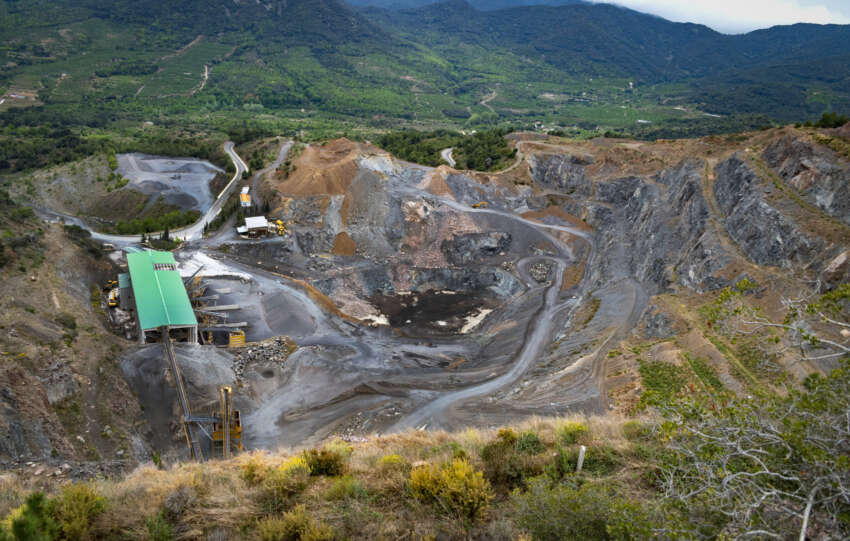
The asset itself sits on a total Ore Reserve of 9.6 million tonnes at 0.65% copper and 0.48 grams per tonne gold. The broader resource across Mt Chalmers, Develin Creek, and Mt Mackenzie now totals approximately 20 million tonnes. Mt Chalmers is a historic mine that last operated in 1982, which means there is existing underground infrastructure and established geology to work with rather than a greenfield development from scratch. That brownfield advantage reduces technical risk and helps explain why QCMBTF’s fund manager pointed specifically to infrastructure advantages as part of the investment rationale. We track developments like this across the ASX at Stocks Down Under.
The DFS, which this capital will directly fund, is the next major value inflection point. A strong DFS result should firm up the project economics, underpin the Final Investment Decision, and give the market a clearer basis to value the asset. Environmental approvals and permitting will run in parallel, along with continued drilling to refine the resource model.
QCMBTF will also receive the right to appoint a non-voting board observer, subject to maintaining its shareholding threshold. That governance right is standard for a strategic investor of this size and provides appropriate oversight without compromising QMines’ independence.
The Investors’ Takeaway for QMines
This deal solves the most immediate problem for QMines near-term funding risk while doing so in a way that keeps the long-term economics largely intact. With QCMBTF now as the largest shareholder, the company has a credible institutional anchor and a clear runway through to FID without needing to return to retail or institutional markets for equity in the near term.
The risks from here are execution-related rather than funding-related. The DFS still needs to deliver competitive project economics. Environmental approvals carry their own timelines. And copper and gold prices, while supportive right now, are never predictable enough to take for granted in a project planning context.
What this transaction does not do is fast-track Mt Chalmers into production. That journey still involves DFS completion, permitting, FEED, and FID before a single shovel of dirt moves in a production context. Investors should calibrate their time horizon accordingly. But for a development-stage copper project with a defined reserve, brownfield infrastructure, and now a funded pathway to FID, the risk profile has materially improved from where it was last week.