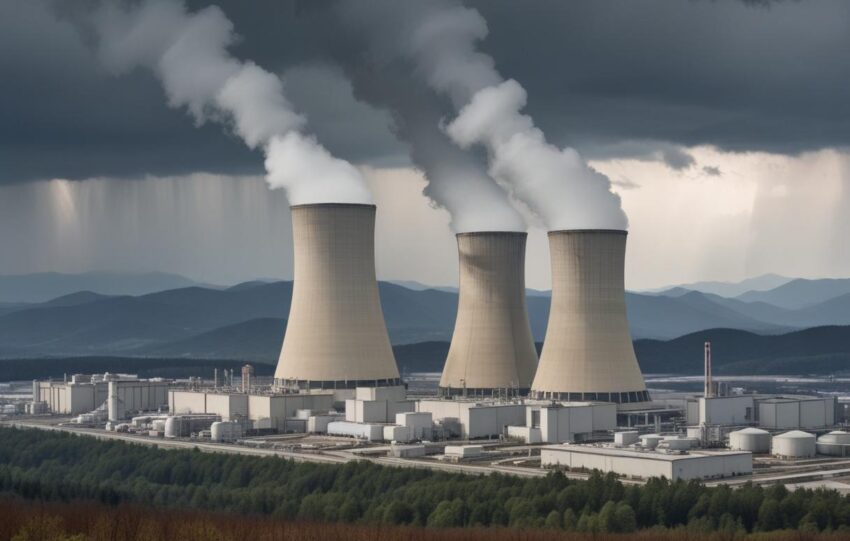
Investing in uranium in 2026 appears as promising a prospect as any since the GFC. Yellowcake has spent most of the past decade as a forgotten commodity, trapped between post‑Fukushima sentiment and a long tail of secondary supply that kept prices pinned to uneconomic levels.
In the years since there was hope uranium would become ‘great again’ such as through Trump’s deregulation on the industry in America and hope the world would embrace nuclear as an alternative to more expensive forms of clean energy. But all the while, the hype was about supply getting chronically short enough to drive prices; hype that was never a reality. Until now.
The Uranium deficit is real
Uranium spot prices have surged from US$70/lb to over US$85/lb in the last 12 months. True, this is off all time highs, but off post-Fukashima lows too and it is all because of the structural deficit. Global reactor demand sits around 180–190 million pounds per year, while primary mine supply delivers only 130–140 million pounds. For most of the past decade, that deficit was masked by mobile inventories, underfeeding in enrichment, and government stockpiles.
Those buffers have now been exhausted or locked up. Utilities that spent years relying on the spot market are being forced back into long‑term contracting, and the tone of those contracts has changed. Floors are higher, volumes are larger, and utilities are no longer in a position to dictate terms.
The supply side has also deteriorated. Kazatomprom, the world’s largest producer, has faced wellfield underperformance, sulphuric acid shortages, and political uncertainty. Cameco has struggled with variability at Cigar Lake and the complexities of ramping McArthur River back to full capacity. These issues are not temporary. They reflect the reality that uranium supply is technically challenging, capital intensive, and slow to respond to price signals. Even at US$90/lb, the pipeline of new projects is thin, and most require multi‑year development timelines.
Uranium trusts and geopolitics have influenced demand and supply too
Financial players have added a new layer of tightness. The Sprott Physical Uranium Trust and Yellow Cake plc have removed millions of pounds from the spot market, while hedge funds have accumulated physical inventory as a macro hedge. These buyers are not price‑sensitive in the way utilities are. They buy when they have capital inflows, not when the market is soft. Their presence has transformed the spot market from a utility‑driven clearing mechanism into a structurally tighter environment where liquidity can evaporate quickly.
Geopolitics has amplified the trend. The Niger coup raised questions about Orano’s supply chain. Russia remains a critical part of the global enrichment and conversion system, yet Western utilities are under pressure to reduce exposure. The United States, United Kingdom, France, Japan, and South Korea have all recommitted to nuclear energy as part of their decarbonisation strategies. China continues to build reactors at a pace unmatched by any other nation. The result is a global environment where utilities are prioritising security of supply over price.
The demand side has also strengthened. Nuclear energy has moved from a defensive baseload option to a strategic asset in a world of electrification, decarbonisation, and AI‑driven load growth. Data centres are consuming unprecedented amounts of power, and utilities are increasingly looking to nuclear as the only scalable, zero‑carbon baseload solution. Small modular reactors have shifted from concept to funded development programs, with governments providing direct support. The narrative has changed, and with it the willingness of utilities to contract ahead of need.
The fuel cycle has become a bottleneck. Conversion and enrichment capacity is tight, and Western utilities are shifting away from Russian services. This has created a dynamic where enrichment underfeeding has reversed, increasing demand for natural uranium. The fuel cycle is now a constraint rather than a buffer, and that constraint feeds directly into higher demand for U3O8.
The combination of all this had led to uranium prices surging
In our view, the uranium price rally is the logical outcome of these forces. It is not a speculative bubble. It is the market finally recognising a structural deficit that has existed for years. The short-term spot price at US$85/lb and the long‑term futures price at US$90/lb both reflect the cost of bringing new supply online, not exuberance.
The past 12 months have been the first phase of a multi‑year re‑rating. The next phase will be driven by project development, utility contracting, and the gradual recognition that the world has underinvested in uranium for more than a decade.
Some ASX uranium plays are benefiting, not all
Against this backdrop, the ASX uranium sector has delivered outsized returns, but the gains have not been evenly distributed. Some have been losers, even some that have reactivated mothballed projects like Boss Energy (ASX:BOE). But some have been winners and let’s look at the 5 top winners (stocks up over 100% in the last year)
In our view, the common thread with all the winners leverage. These companies entered the uranium upcycle with small market caps, meaningful land positions, and clear catalysts. When the macro turned, they were positioned to move. And they avoided missteps other companies made. Moreover, a few have had exposure to ISR (In-Situ Recovery) that is the lowest cost and lowest impact method of uranium extraction used today.
5 ASX uranium stocks reaping windfalls right now
1. Cauldron Energy (ASX:CXU): Up 585%
Cauldron has been the sector’s most explosive mover, and the reason is its Yanrey Project in Western Australia. Yanrey been re‑rated on the basis of ISR potential, inferred from drilling, geophysics, and reinterpretation of historical data. ISR amenability is rare in WA, and the market has responded to the possibility that Yanrey could be developed at lower cost than previously assumed.
The company has also benefited from a refreshed management approach and a renewed focus on advancing the project. With a tiny starting market cap, any positive newsflow has been magnified. In our view, CXU is a classic high‑torque microcap: it moves sharply on sentiment and speculation, and the market has priced in the possibility of a genuine ISR discovery.
2. Toro Energy (ASX:TOE) : Up 246%
Toro’s performance reflects its position as one of the few ASX uranium juniors with a large, advanced project. The Wiluna Uranium Project has undergone re‑scoping, with improved economics and a clearer development pathway.
The Lake Maitland component has progressed toward DFS‑level work, and the company has benefited from a softening political environment in Western Australia. Investors have begun to view Toro not as a pure explorer but as a near‑development name with scale. The resource base is substantial, and the project’s optionality has become more valuable as uranium prices have risen. In our view, Toro’s rerating reflects both macro leverage and project maturity.
3. Haranga Resources (ASX:HAR): Up 142%
Haranga has delivered strong exploration results at the Saraya Uranium Project in Senegal. Maiden drilling has confirmed high‑grade zones, and the company has established itself as a credible West African uranium explorer. The Niger coup added a geopolitical risk premium to African uranium supply, and investors have rotated into names with exposure outside Niger. Haranga’s low starting market cap has amplified the impact of exploration success, and institutional interest has increased as the project has matured. In our view, HAR is a discovery story, and the market is pricing in the potential for a meaningful resource.
4. Orpheus Uranium (ASX:ORP): Up 119%
Orpheus is different in that it has not been listed for several years waiting for prices to rebound. It only listed in 2023, doing so with a clean capital structure and a strong land position in South Australia, one of the most favourable jurisdictions for ISR uranium.
Early exploration results and geophysical work have been encouraging, and the company has benefited from investor appetite for new uranium names with ISR potential. The stock’s performance reflects both the quality of the land package and the momentum that often accompanies new listings in a rising commodity market.
5. Adavale Resources (ASX:ADD): Up 118%
Adavale is a dual‑commodity story, with uranium exposure through the Lake Surprise Project in South Australia and nickel exploration in Tanzania. The uranium component has gained attention as ISR‑prospective, and the company has benefited from sector‑wide rotation into microcaps.
The nickel exposure adds speculative upside, and the low market cap has provided leverage to any positive newsflow. In our view, ADD’s performance reflects its position as a high‑torque speculative name with multiple catalysts.
The Bottom Line on Investing in Uranium in 2026
The uranium market has entered a new phase. The structural deficit is real, the supply side is constrained, and utilities are returning to long‑term contracting. Financial players have tightened the spot market, and geopolitical dynamics have added a risk premium. Against this backdrop, the ASX uranium sector has delivered outsized returns, but the gains have been concentrated in names with leverage, catalysts, and exploration upside.
Cauldron, Toro, Haranga, Orpheus, and Adavale have more than doubled because they offered the right combination of optionality and momentum at the right time. They were positioned to benefit from a rising uranium price, and each delivered company‑specific catalysts that amplified the macro trend. In our view, the next phase of the cycle will reward companies that can convert optionality into resources, resources into studies, and studies into development pathways. The market has re‑rated uranium. The challenge now is execution.