Fortuna Metals is emerging as one of the most interesting natural rutile exploration stories in the market. The company controls the Mkanda and Kampini projects in Malawi, a combined 658km² land position that sits directly south of Sovereign Metals’ Kasiya deposit. Kasiya is the world’s largest undeveloped natural rutile resource and has already demonstrated the commercial potential of this geological province. Fortuna’s investment case rests on three pillars: geological continuity with Kasiya, a structural supply deficit in natural rutile, and the company’s ability to execute quickly on the path toward a maiden JORC Resource.
The past several months have shown that this is not a passive exploration story. Fortuna has moved at a pace that is unusual for a company at this stage. It has expanded drilling coverage, confirmed widespread high‑grade rutile, removed regulatory uncertainty, commenced bulk sampling and metallurgy, and strengthened its technical team with specialists who have direct experience in the region. Each of these steps builds the picture of a company that is transitioning from reconnaissance exploration to genuine resource definition.
A strong geological foundation
Mkanda and Kampini sit within the same rutile‑graphite bearing rock unit that hosts Kasiya. The Malawian Geological Department has mapped this unit extending southward into Fortuna’s ground, and early work has validated that interpretation. Soil sampling and QEMSCAN analysis showed an average of 1.11% natural rutile with rutile comprising roughly 80% of the titanium mineral assemblage. This mirrors the mineralogy that underpins Kasiya’s economics and is geologically uncommon. It is also one of the reasons natural rutile deposits of meaningful scale are so rare.
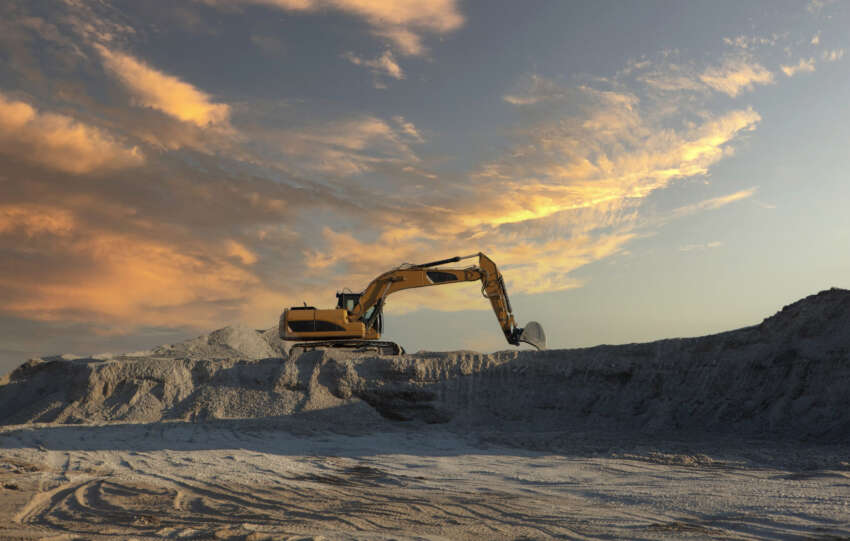
The mineralisation at Mkanda is shallow, laterally extensive, and amenable to rapid, low‑cost drilling. Hand‑auger and aircore programs have already covered large areas of the tenements. Grades have reached as high as 2.32% rutile, with multiple intercepts above 1% rutile over 10‑metre intervals. These are reconnaissance results rather than resource‑grade drilling, but they confirm a system that is coherent, persistent, and large enough to justify the next stage of investment. The geometry of the mineralisation is also encouraging. High‑grade core zones extend to end‑of‑hole, flanked by surface‑only mineralisation of two to four metres thickness. This pattern is strikingly similar to Kasiya’s structural profile.
From a development perspective, the operational strategy would likely mirror Kasiya’s. A future operation would consist of multiple shallow satellite pits feeding a central processing hub. Payability would be driven by proximity to the Nacala rail corridor and the ability to establish coherent, high‑grade mining blocks. This model is simple, scalable, and well suited to the style of mineralisation present at Mkanda.
A market backdrop defined by structural scarcity
Natural rutile is one of the most commercially attractive titanium feedstocks. It contains between 93% and 96% titanium dioxide, requires minimal processing, and is the preferred input for chloride‑route pigment production and titanium metal. Despite these advantages, around 95% of global titanium supply still comes from ilmenite because large natural rutile deposits are exceptionally rare.
The supply picture is deteriorating. Sierra Rutile in Sierra Leone and Base Resources’ Kwale operation in Kenya are both approaching the end of their mine lives. Independent modelling suggests global rutile supply could fall by more than 50% by 2033 if no new large deposits enter production. This is not a cyclical dip. It is a structural deficit that will become more acute as the decade progresses.
Demand, meanwhile, is accelerating. Titanium dioxide pigment remains the largest end use, driven by construction and infrastructure growth in China and India. Aerospace and defence are the highest‑value markets, with modern aircraft using far more titanium than previous generations. A new demand vector is also emerging in humanoid robotics. Titanium’s strength‑to‑weight ratio and fatigue resistance make it the preferred material for robotic joints, actuators, and exoskeleton frames. Chinese data already shows a surge in titanium alloy demand for robotics applications, and long‑term forecasts suggest a significant supply gap if humanoid adoption scales.
Fortuna is one of the few companies positioned to bring meaningful new rutile supply to market over a realistic development horizon.
Operational progress that changes the risk profile
The past three months have been transformative for Fortuna. The company has delivered multiple batches of drilling results confirming widespread high‑grade mineralisation. It has also resolved a key regulatory concern. Malawi introduced an executive order banning the export of unprocessed ore in late 2025, raising questions about whether early‑stage explorers would be affected. In February 2026, Fortuna received formal confirmation that the restrictions do not apply to its intended development model, which involves beneficiation and concentrate production rather than raw ore export. This clarification removes a major perceived risk and aligns with the regulatory framework under which Sovereign Metals already operates.
The commencement of bulk sampling and metallurgical testwork marks an even more important milestone. Metallurgy is often the decisive factor in mineral sands projects. A high‑grade orebody with poor recovery characteristics can be commercially inferior to a moderate‑grade orebody with clean, simple processing. Fortuna’s testwork is being conducted in Johannesburg, consistent with regional best practice. In parallel, 115 drill holes have been sent for graphite analysis. Graphite credits were a major contributor to Kasiya’s economics, effectively doubling the rutile equivalent grade. If Mkanda demonstrates similar graphite content, the project’s value proposition strengthens considerably.
The company has also strengthened its technical capability. The hiring of former Iluka processing specialist David Bougourd and geologist Richard Stockwell, who has direct involvement with Kasiya, signals a deliberate shift into a more advanced phase. These appointments ensure that drilling, metallurgy, and resource estimation are being guided by individuals with deep regional and technical expertise.
A clear path to value creation
Fortuna enters the second half of 2026 with a credible timetable for its maiden JORC Resource. Phase 2 aircore drilling is scheduled to begin in May, targeting infill of the highest‑grade areas and deeper penetration of the mineralised profile. Metallurgical results, graphite assays, and expanded drilling coverage will all feed into the resource model. The company is well funded for this stage of work, with A$7.4 million in cash following a late‑2025 placement.
A maiden resource is the next major de‑risking event. Once a Pre‑Feasibility Study is completed, companies in this sector often trade at a mid‑teens percentage of project NPV. Sovereign Metals currently trades at around 14.5% of its project’s NPV¹, providing a useful reference point for how the market may value Fortuna once it reaches the same stage.
Conclusion
The investment case for Fortuna stands on its own merits: a rare rutile system, a tightening global supply backdrop, and a management team executing with speed and discipline. But 2026 has been the year that the company moved rapidly from early reconnaissance to the threshold of resource definition which it will cross in the coming weeks.
Fortuna is a research client of Pitt Street Research and Pitt Street directors own shares.