
Alliance Aviation Services Limited
(ASX: AQZ)Share Price and News

About Alliance Aviation Services
Alliance Aviation Services is a provider of aviation services. The company's operations include fly-in fly-out (FIFO) services for the mining and energy sectors, ad-hoc charter flights, and aircraft wet and dry leasing.
Alliance operates a diverse fleet, including Fokker 70, Fokker 100, and Embraer E190 aircraft, servicing over 46 destinations. A significant aspect of Alliance's business model is its strategic partnerships, notably with Qantas, which holds a 20% stake in the company. Through wet lease agreements, Alliance operates Embraer E190 jets under the QantasLink brand, enhancing its revenue streams and market presence.
Alliance Aviation's Company History
Alliance Aviation Services began operations by acquiring the assets of the defunct Flight West Airlines in 2002. Starting with two Fokker 100 aircraft, the company focused on providing reliable FIFO services to Australia's resource sector. Over the years, Alliance expanded its fleet and service offerings, including acquiring additional Fokker aircraft from EU-based Austrian Airlines in 2015. In 2019, Qantas acquired a 19.9% stake in Alliance, strengthening its collaborative ventures.
2020 saw an unexpected boom in demand. The pandemic shutdowns meant commercial flights were limited and certain companies like mining companies and sport teams needed Alliance's services.
The company further expanded its fleet by purchasing 30 Embraer E190 jets between 2020 and 2023. The total fleet size is projected to reach 90 aircraft, including 52 E190s, by 2026, enhancing capacity and efficiency.
That era also saw attempts by Qantas to buy out the company completely, but this was blocked by the Australian Competition & Consumer Commission in 2023.
Alliance continues to thrive independently, focusing on strategic growth and operational excellence. In FY25 the company reported revenue of approximately $760.9m and EBITDA of $207.3m, reflecting nearly 20% revenue growth year-on-year.
Future Outlook of Alliance Aviation Services (ASX: AQZ)
The outlook for Alliance Aviation is closely tied to demand for contract aviation services from both the resources sector and major airlines. The company’s core business remains FIFO charter flights that transport workers to remote mining and energy operations across Australia. Activity in this segment generally follows commodity cycles and resource project investment, meaning strong mining sector demand can translate into higher flight hours and increased contract utilisation.
Another key driver of future performance is the company’s wet-lease arrangements with airlines. Alliance’s partnership with Qantas has expanded significantly in recent years as the airline deploys Embraer E190 aircraft across regional and domestic routes. Long-term wet-lease agreements provide relatively stable revenue streams and allow Alliance to generate income from aircraft utilisation without bearing the marketing and ticketing costs of a traditional airline business.
Operational growth in recent years has been supported by fleet expansion and increased flying hours. In FY2025 the company reported record flight activity alongside revenue growth of nearly 20%, reflecting higher utilisation across its aircraft fleet. However, rising maintenance costs, fleet investments and operational disruptions have also placed pressure on profitability.
For FY26, the company has provided specific earnings guidance indicating lower profitability than previously expected. Management has guided to EBITDA in the range of $190-210m, EBIT between $77-85m and profit before tax of approximately $46-50m.
Subsequent updates following the first half of FY26 suggested that profit before tax may be closer to $35-40m due to additional costs and operational challenges, including maintenance expenses and aircraft impairments. Despite these issues, the company continues to report strong demand for flight services and record flying hours, suggesting that the underlying aviation services market remains robust.
Looking ahead, management’s strategy focuses on improving contract quality, reducing costs and optimising capital allocation. The company is also targeting gradual reductions in net debt as cash flow improves, while maintaining long-term contracts with airlines and resource companies. If these initiatives succeed, Alliance could stabilise earnings and continue growing its aviation services platform over the coming years.
Is Alliance Aviation a Good Stock to Buy?
Alliance Aviation is often viewed by investors as a niche aviation company rather than a traditional airline. Its contract-based business model provides some structural advantages because a large proportion of flying hours are secured through long-term agreements with corporate clients and airline partners. This reduces exposure to fluctuations in passenger demand and airline ticket pricing, which often create volatility for traditional carriers.
Another positive aspect of the investment case is the company’s exposure to Australia’s resources sector. FIFO charter services are essential for transporting workers to remote mining and energy sites, and this demand tends to remain stable as long as commodity projects remain operational. Because many of these contracts run for several years, they provide relatively predictable revenue streams compared with the cyclical passenger aviation market.
The company has also benefited from its partnership with Qantas, which has significantly increased aircraft utilisation through wet-lease operations. Long-term agreements with major airlines can generate stable revenue and help spread fixed aircraft ownership costs across higher flying hours. If the relationship with Qantas continues to expand, it could support additional fleet growth and improved earnings visibility.
However, investors should also consider several risks. Aviation is a capital-intensive industry, and Alliance carries significant debt associated with aircraft purchases and fleet expansion. Rising maintenance costs, depreciation and operational disruptions can materially affect profitability, as seen in recent financial results.
The company’s FY26 earnings guidance also indicates a temporary decline in profitability, with expected EBITDA of $190–210 million and profit before tax potentially as low as $35–40 million depending on operational conditions. These lower earnings reflect cost inflation, fleet write-downs and challenges with certain wet-lease contracts.
Overall, Alliance Aviation may appeal to investors who believe in the long-term demand for contract aviation services linked to Australia’s resources sector and airline partnerships. While the company benefits from long-term contracts and growing flight activity, its performance can still be affected by operational costs, fleet investments and industry volatility. As a result, the stock is often viewed as a cyclical infrastructure-style aviation play rather than a traditional airline investment.
Our Stock Analysis
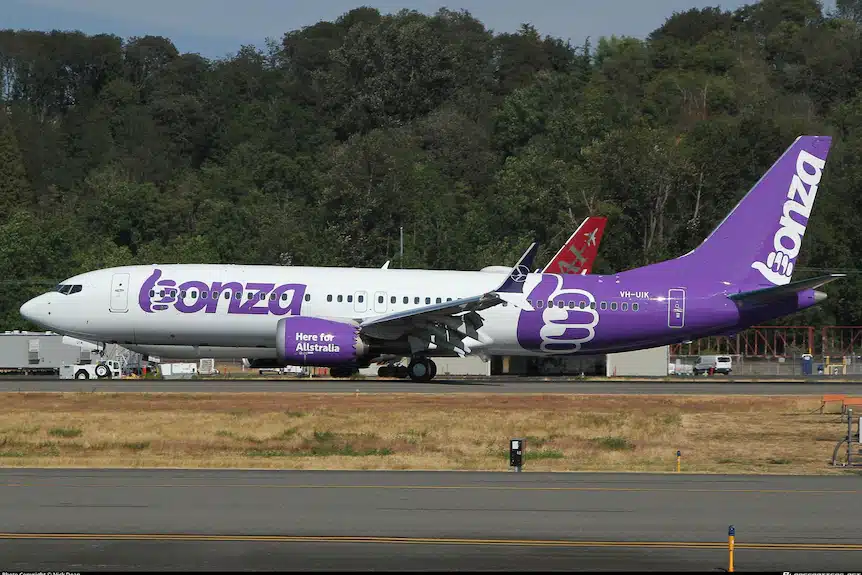
Is the entry of Bonza going to hurt Australian airline stocks?
For the first time since 2007, Australia has a new airline. Sunshine Coast-based Bonza finally took its first flight on…

ASX travel stocks are taking off again in 2022, but which ones will fly the highest?
ASX travel stocks were among the worst companies hit by the Corona Crash as demand was literally eliminated in just…
Frequently Asked Questions
As of March 2026, Alliance Aviation Services does not pay a dividend. The company has focused on reinvesting profits to fund fleet expansion and operational growth.