BrainChip Transitions from Prototype to Production (What Investors Need to Know)
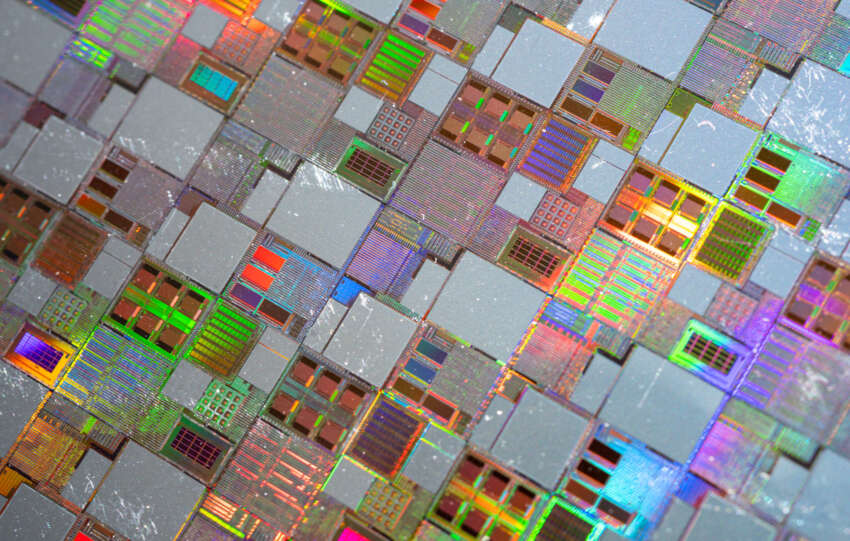
BrainChip (ASX: BRN) has just taken a major step forward, announcing it is moving from development and prototyping to actual chip production. The company has begun the tape-out process for its new AKD1500 chip, a milestone that signals the design is complete and ready for manufacturing. This stage will cost around USD 2.3 million, with the first chips expected to roll out by the third quarter of 2026.
The AKD1500 marks an important milestone in BrainChip’s patented technology portfolio. It is a neuromorphic chip, designed to process information in a way that mimics how the human brain functions. This approach enables highly efficient, low-power artificial intelligence performance, making it ideal for use in smart devices and edge applications rather than traditional data centres.
This step signifies BrainChip’s transition from concept to commercial reality, positioning the company to demonstrate the real-world potential of its technology in the fast-growing AI hardware market.
Check our buy/sell stock tips

BrainChip Targets Rapidly Growing AUD 66 Billion Edge AI Market
The global edge AI market was valued at approximately AUD 20 billion in 2024 and is forecast to reach around AUD 66 billion by 2030, according to Grand View Research, representing a strong compound annual growth rate of 22%. This rapid expansion reflects the growing demand for smarter, low-power computing in devices that operate independently of cloud data centres.
For BrainChip, moving into production marks a critical step toward generating revenue through direct chip sales and potential licensing agreements. As the company transitions from development to commercialisation, it is positioning itself to capture a share of one of the fastest-growing segments in the AI hardware industry.
By the end of 2025, IoT Data Explodes, Edge AI Emerges as the Smarter, Faster Solution
By the end of 2025, IDC forecasts that more than 75 billion Internet of Things (IoT) devices will be in use globally. Every day, electronics such as wearables, cameras, and industrial sensors are generating enormous volumes of data. For instance, a single smart factory can produce around 1.5 petabytes of data each day, equivalent to 1.5 million gigabytes. Sending all that data to the cloud for processing is increasingly impractical due to cost, speed, bandwidth constraints, and security issues.
This is where Edge processing comes in. Instead of relying on remote servers, devices process data locally, enabling instant analysis and response. For example, a factory robot can detect an equipment fault and correct it immediately without waiting for cloud instructions. This shift toward real-time, on-device intelligence is driving roughly 40% of global demand for Edge AI solutions, a market directly aligned with BrainChip’s ultra-low-power, neuromorphic technology.
BrainChip’s AKD1500 Explained: How It Differs from Traditional AI Processors
The AKD1500 is BrainChip’s next-generation AI processor, developed using an advanced 22-nanometre manufacturing process that optimises power efficiency and performance. The chip is engineered to minimise energy leakage, enabling devices to operate longer while reducing degradation. This design is particularly suited to the growing Edge AI market, where energy efficiency is essential for sustained performance in mobile and embedded systems.
The AKD1500 is built to power applications such as wearables, medical devices, drones, and sensors, areas where low power consumption is critical. Unlike traditional graphics processing units (GPUs) that typically require between 10 and 100 watts to run AI workloads, the AKD1500 can perform similar tasks using less than one milliwatt of power. With an expected production cost of only USD 10 to USD 20 per unit at scale, the chip could offer manufacturers a highly cost-effective and energy-efficient solution, helping lower operating costs while enhancing device performance and longevity.
How Does Neuromorphic Processing Work
Neuromorphic computing is designed to mimic how the human brain processes information. In the brain, neurons activate only in response to specific stimuli such as sound, movement, or visual cues. They do not continuously consume energy processing every signal. Neuromorphic technology applies the same principle by processing information only when necessary, through brief spikes of activity. This event-driven approach means the chip remains mostly idle until it detects something worth analysing, significantly reducing power consumption.
As a result, neuromorphic chips can deliver substantial energy savings compared to traditional GPUs, making them ideal for next-generation AI devices that require efficient, real-time processing with minimal energy use.
BrainChip’s Three-Pillar Revenue Model Positions It for Scalable Growth
According to its most recent half-year report, BrainChip generated approximately USD 1 million in revenue during the first half of FY25. The company’s revenue model is built around three core streams that support both near-term growth and long-term scalability.
The first stream is direct product sales, where BrainChip sells its Akida neuromorphic chips such as the existing AKD1000 and the upcoming AKD1500 to manufacturers and system integrators. In the first half of FY25, product sales contributed around USD 19,000, but with the transition to full-scale chip production, this segment can potentially become the primary driver of revenue over the next five years.
The second stream is development services, which currently forms the bulk of revenue. This includes custom engineering projects and collaboration agreements that integrate BrainChip’s IP into partner systems. Notable partnerships include Frontgrade Gaisler for space-grade chips, Onsor Technologies for epileptic seizure prediction, HaiLa Technologies for low-power IoT solutions, and Chelpis Quantum for robotic security applications.
The third stream is licensing, where BrainChip generates income by licensing its intellectual property to semiconductor companies and manufacturers. This model provides an additional pathway to scale, offering recurring, high-margin revenue opportunities as adoption of neuromorphic technology expands globally.
The Investor’s Takeaway For BrainChip
With the company now starting up chip production, through a foundry, we expect to see a sharp revenue ramp up from chip sales starting late in 2026. Of course, the IP license model will still be available for customers that want to integrate the IP into their products themselves and maybe customise it somewhat. In any case, we believe this tape-out news is a very good sign for BRN shareholders!