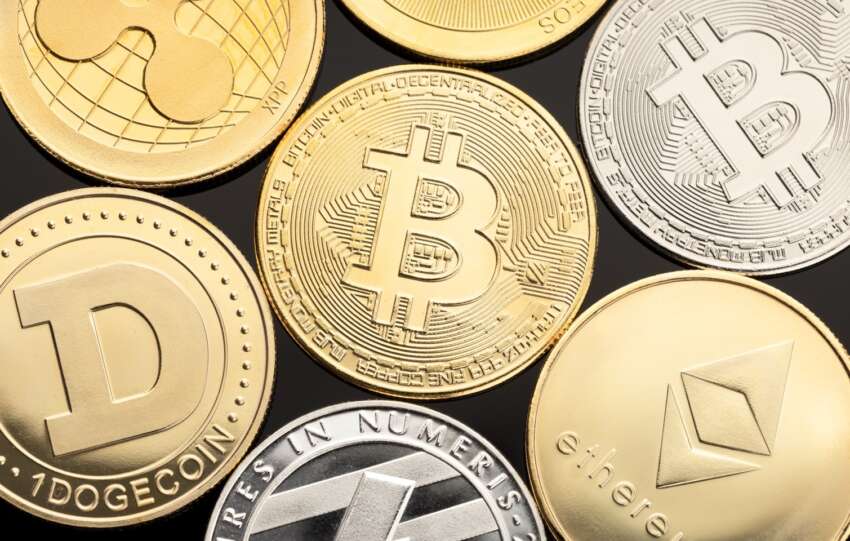
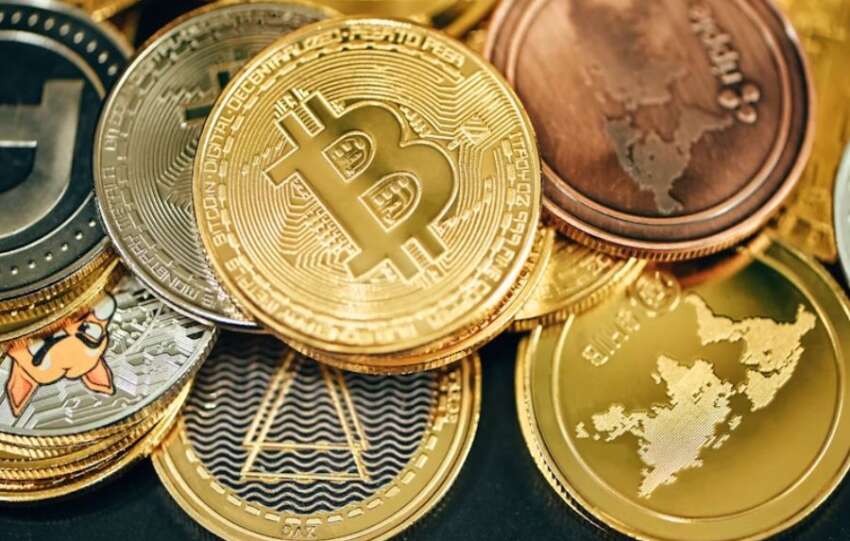
Cryptocurrencies other than bitcoin…yes, they do exist. They aren’t as well know, but there are plenty of them out there, some have done better than others and some have even outperformed bitcoin. In our view, it was beyond time for us to write about some of them and what investors considering them need to ponder before investing.
What are the Best ASX stocks to invest in right now?

When considering Cryptocurrencies other than bitcoin: Remember this
Bitcoin is called a cryptocurrency but is arguably in its own category because it is primarily digital money and a store-of-value system. Most other major cryptocurrencies are technology platforms, financial infrastructure, or protocol tokens that enable applications such as smart contracts, decentralised finance (DeFi), stablecoins, or data services. This distinction is crucial for understanding risk.
At a high level, cryptocurrencies fall into three broad categories:
-
Monetary assets (store of value, settlement)
-
Financial and computing infrastructure (platforms and rails)
-
Applications and protocols (DeFi, gaming, data, etc.)
Bitcoin is almost entirely in category one. Most other cryptocurrencies are in categories two and three.
Most confusion about cryptocurrencies comes from treating all of these as if they were the same thing. They are not. Bitcoin is not the Jack of all Trades but the Master of None. It does just one thing and does it extremely well: it is neutral, scarce, censorship-resistant digital money. Because of this, Bitcoin behaves less like a tech product and more like digital commodity money, often compared to gold rather than a startup or platform.
Meanwhile, cryptos like Ethereum, Solana, and similar networks are economic platforms, more comparable to operating systems or financial infrastructure. They enable applications to exist but are constantly competing with each other on speed, cost, and developer adoption.
These behave more like technology assets than money. Their value depends on usage, fees, adoption, and continued relevance. But many investors treat Bitcoin as a monetary asset first, not a technology bet. So comparing bitcoin to other cryptos is like comparing apples and oranges.
Cryptocurrencies other than bitcoin: Here are 7 of the most popular
Ethereum
Ethereum is a general-purpose blockchain designed to run smart contracts and decentralised applications. It underpins much of DeFi, NFTs, stablecoins, and tokenised assets. ETH is used to pay transaction fees (“gas”) and secure the network through staking.
Ethereum has gained over the last 12 months largely due to expectations around spot Ethereum ETFs, continued growth in staking participation, and its central role in tokenisation narratives (real-world assets, stablecoins, institutional DeFi). Improvements from past upgrades have also reduced net ETH issuance, supporting supply-demand dynamics.
What investors need to consider is that Ethereum is a platform bet, not just a monetary asset. It faces competition from faster chains, complexity risk, and ongoing changes to its economics and roadmap. That said, it is the most established smart-contract ecosystem and is often viewed as the “blue chip” after Bitcoin.
Solana
Solana is a high-performance smart-contract blockchain optimised for speed and low fees. It is popular for consumer-facing crypto applications, trading, NFTs, and memecoins.
Its strong gains over the last year are driven by a revival of on-chain activity, rapid growth in users, renewed developer momentum, and the perception that Solana is winning where low latency and low fees matter. It has also benefited from capital rotating into higher-beta assets during bullish phases.
The key consideration for investors is that Solana trades heavily on growth and usage momentum. It has historically experienced outages and is more centralised than Bitcoin or Ethereum, which adds technical and governance risk. When sentiment turns, Solana tends to fall faster than Bitcoin or ETH.
XRP (Ripple)
XRP is designed for cross-border payments and liquidity between financial institutions. It is closely tied to Ripple Labs, which develops enterprise payment solutions.
XRP’s gains over the last year have been driven largely by regulatory clarity following favourable US court rulings, renewed exchange listings, and speculation around bank adoption. Unlike most crypto assets, XRP’s price is strongly influenced by legal and regulatory developments.
Investors should understand that XRP is not a decentralised platform play like ETH or SOL. Its value depends on adoption of Ripple’s payment rails and ongoing regulatory outcomes. Supply concentration and token issuance structure are also important considerations.
Chainlink (LNK)
Chainlink provides oracles — infrastructure that allows blockchains to access real-world data such as prices, interest rates, and events. Many DeFi applications depend on it.
LINK has gained due to its growing role in institutional tokenisation, partnerships with banks and financial institutions, and the rollout of services like Cross-Chain Interoperability Protocol (CCIP). It benefits from being “picks and shovels” infrastructure rather than a consumer chain.
For investors, Chainlink is a utility-driven network rather than a settlement layer. Its success depends on ongoing integration and usage, and token value capture is more indirect than for base-layer blockchains.
Hedera
Hedera uses a hashgraph rather than a traditional blockchain and focuses on enterprise use cases, such as supply chain tracking, payments, and identity. It is governed by a council of major corporations.
HBAR’s recent performance reflects increased marketing, ecosystem development, and renewed interest in enterprise and real-world use cases. However, adoption remains more aspirational than proven at scale.
Investors should note Hedera is permissioned and governance-heavy relative to Bitcoin or Ethereum. This can appeal to enterprises but reduces censorship resistance and decentralisation — key factors for long-term crypto purists.
Sui
Sui is a newer Layer-1 blockchain built for scalability and fast transaction finality, using a novel programming model. It targets gaming, social, and consumer applications.
Its gains over the last year are driven by early-stage growth speculation, ecosystem incentives, venture backing, and excitement around new technical architectures.
Sui is a high-risk, early-cycle asset. Token unlocks, competition, and uncertain long-term adoption are key risks. These types of assets tend to perform well in bullish markets and poorly in risk-off environments.
Ethena
Ethena is a DeFi protocol token, best known for its synthetic dollar (USDe) that uses derivatives and crypto collateral to maintain stability. ENA is a governance and incentive token rather than money.
Its price appreciation has come from rapid TVL growth, yield demand, and speculation around new DeFi primitives. It is closely tied to market conditions and derivatives liquidity.
Ethena carries protocol, counterparty, and systemic risk. It is far more complex than Bitcoin or ETH, and its stability mechanisms may behave unpredictably in extreme market stress.
Bottom line
In many ways, it would be fair to say the story of bitcoin vs other cryptos is almost like the analogy of the US dollar vs other currencies. Now, we aren’t saying this because we are crypto bros. But we can’t think of a better analogy.
The US dollar is the global reserve currency, the unit of account for global trade, the asset people flee to in crises, sits at the centre of liquidity.
Bitcoin plays a similar role in crypto. Most crypto pairs trade against BTC, liquidity flows into Bitcoin first, institutions enter via Bitcoin first and Bitcoin dominates market capitalisation and trust
Just as other currencies (the euro, the yen, the kiwi dollar and otthers) exist and serve purposes, other crypto assets exist and innovate — but they orbit Bitcoin, not the other way around.
The point we are trying to make is that although cryptos other than bitcoin exist, bitcoin is reserve currency of crypto, in the same way the US dollar stands above other fiat currencies.
But we hope the underlying message for investors to take away is that cryptocurrencies are tools, platforms, and experiments built on top of a monetary base that Bitcoin already occupies.