Fortuna Metals (ASX:FUN) is a classic ‘nearology’ play for investors, and a unique one at that. ‘Nearology plays’ have deposits in the same district as larger companies that have had success and the hope is that these companies can have the same success. Often, there can be more than a dozen plays that pitch their tents around a successful deposit – what happened after Chalice’s (ASX:CHN) Julimar discovery is a case in point.
But Fortuna is a unique one in 3 respects. First, it is focused on rutile – a commodity few other ASX-listed explorers focus on. Second, it is immediately adjacent to the company it is trying to follow as opposed to being within a district of dozens of square kilometres but on the opposite side of the broader district. And third, it is adjacent to the world’s largest known deposit for rutile.
What are the Best ASX Stocks to invest in right now?

Fortuna Metals hopes to follow in the footsteps of Sovereign (ASX:SVM)
Sovereign Metals (ASX:SVM) is the owner of the aforementioned rutile deposit and the company that Fortuna is trying to follow. Kasiya was valued at US$2.3bn in its Optimised Pre-Feasibility Study (PFS) in January 2025, while Sovereign Metals is capitalised at >$350m and is well on the way towards securing financing, having granted the World Bank’s International Finance Corporation the financing rights to fund Kasiya.
SVM is 19.9% owned by Rio Tinto (ASX:RIO), and beyond providing US$60m in capital, the major miner’s team. Rio has supported SVM through the Optimised Pre-Feasibility Study (PFS) and will continue into the Definitive Feasibility Study (DFS), helping de-risk the project. Rio’s backing signals that Tier-1 miners are actively seeking natural rutile and low-carbon feedstocks.
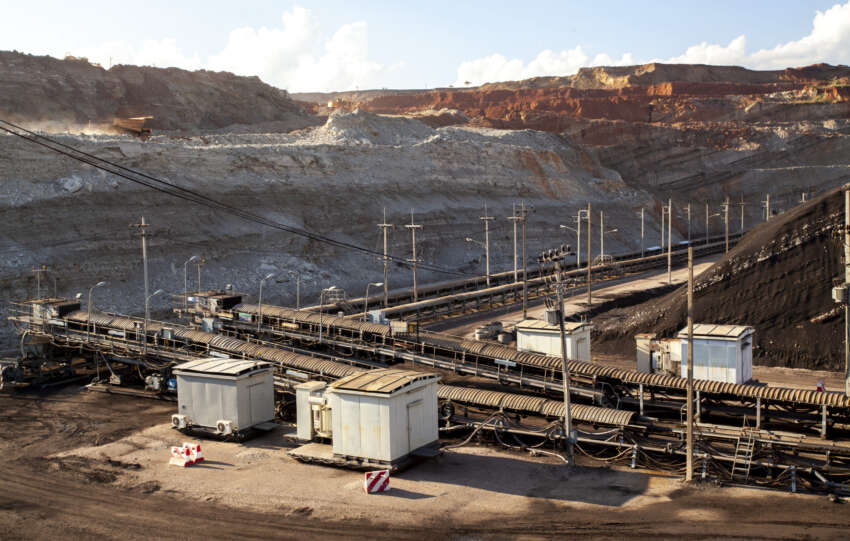
Fortuna got into Malawi in September 2025 when it announced a share sale agreement to acquire 100% of the Mkanda and Kampini Rutile Projects. The projects lie in a highly prospective rutile province with a substantial landholding of 658 km². The projects sit along strike from the SVM Kasiya deposit, the world’s largest natural rutile resource, making Kasiya the most relevant geological and economic comparable given that the projects lie directly adjacent to each other.
There’s confidence that there could be something special
Of course, no company takes up land next to another major mine without suspecting there could be something there. But Fortuna’s own work up to this point (and its own due diligence on work done by previous owners), has done nothing to dim its confidence. Soil sampling has found exceptional rutile results in both grade and spatial extent) (>2.4km strike/width). Early drilling results (from several dozen holes) have been positive too not just because of the high grades but because the mineral assemblage closely mirrors Kayisa, it is shallow depth (from surface to 25m) and is laterally extensive.
Drilling in the current campaign will continue right up to Christmas. Following a break, drilling will resume in April/May 2026 during the dry season. This campaign will use aircore drilling which will infill the highest grade area, enabling the drilling past perched water tables and deeper to the saprock boundary (in other words, enabling deeper drilling).
Fortuna is planning to set up a low cost in-country laboratory to prepare the sample for heavy mineral separation, magnetic separation and XRF analysis. Samples that undergo in-country sample preparation will be set to an external laboratory for analysis.
What’s the big deal about rutile?
Rutile is an important for titanium. 69% of rutile’s end uses are in titanium pigment or titanium metal, while the balance goes towards welding (which includes, but is not limited to, end applications of titanium). There are many end uses including in chemical, medical, industrial, robotics, defence aerospace, and even consumer goods. In all of these strength, longevity and light weight all matter to the point there cannot be trade-offs between any of these traits.
Titanium is the fourth most abundant structural metal in the Earth’s crust, accounting for roughly 0.6% of its composition and it is a crucial metal in its own right. However, only a select few minerals contain titanium in a form that can be economically extracted and processed. Rutile is the most significant of these minerals and thus the key potential economic driver of Fortuna Metals’ Malawi Project.
Rutile typically forms as reddish-brown, hard, metallic crystals, often slender and intertwined with surrounding minerals. What makes rutile so economically important is its exceptional purity. Containing between 93% and 96% titanium dioxide (TiO₂), it is the highest-grade natural titanium mineral known, and therefore the preferred feedstock for producing high-quality titanium metal and pigment.
Currently the vast majority of the world’s supply comes from ilmenite because of its greater abundance. Rutile is the superior feedstock with higher quantity titanium and higher purity, thus enabling simpler, cheaper and more environmentally friendly processing.
Even with rutile’s promise, there is a large supply deficit already in existance and two of the world’s most significant operations – Sierra Rutile in Sierra Leone and Base Resources’ Kwale Mine in Kenya – are nearing the end of their mine lives, representing a combined production loss of roughly 201,000 tonnes per year. But if Fortuna finds that it has a major rutile deposit, it could be highly lucrative.
Peers bode confidence in a re-rating
Our friends at Pitt Street Research published a note on Fortuna earlier today. While the report did not value the company, believing it was too early to do so, it noted a couple of peers from which inspiration could be drawn. First St George Mining (ASX:SGQ) that has a niobium project adjacent to the world’s largest niobium mine in Brazil and significantly re-rated (i.e. from $50m to over $400m) in a matter of months during 2025 due to exploration results.
The second is IperionX (ASX:IPX) which has a project consisting of a major titanium deposit and factory making alloys. IPX may not seem an appropriate peer being valued at over A$1.8bn, but both operate within the same powerful macro themes in nationalising critical minerals supply chains.
Conclusion
Fortuna is a unique nearology play. It may not have the most famous mineral (in rutile) but it has one of the most critical and is adjacent to the world’s largest known deposit. And look what that deposit did to re-rate Sovereign (ASX:SVM). Realistically, Fortuna does have more work to do in order to reach Sovereign’s success, but we think the foundations are firmly in place.
Fortuna is a research client of Pitt Street Research. Pitt Street directors own shares in Fortuna.